
 EN
EN
 AR
AR BG
BG HR
HR CS
CS FR
FR DE
DE EL
EL HI
HI IT
IT JA
JA KO
KO RO
RO RU
RU ES
ES TL
TL ID
ID LT
LT SK
SK SL
SL UK
UK VI
VI ET
ET TH
TH TR
TR FA
FA AF
AF MS
MS HY
HY AZ
AZ KA
KA BN
BN LO
LO LA
LA MN
MN NE
NE MY
MY KK
KK UZ
UZ KY
KY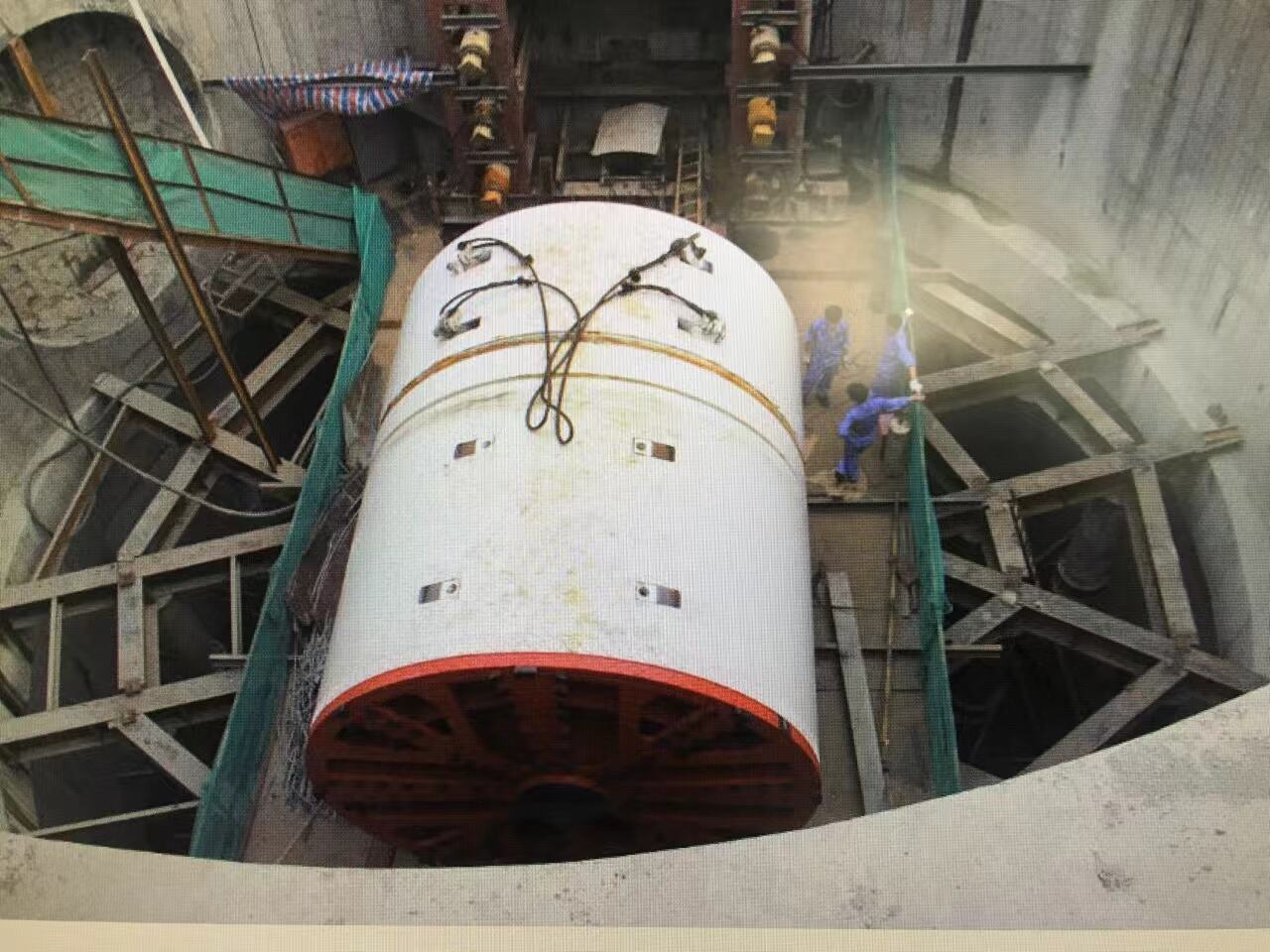
Selecting the right laser guidance for micro tunnel boring machine operations is one of the most consequential decisions an engineer or project manager will make before breaking ground. The precision of underground alignment directly affects the structural integrity of the finished bore, the accuracy of pipe placement, and the overall cost of the project. A misaligned bore can cost tens of thousands of dollars in remediation work and create significant liability risks. Understanding exactly what to look for in a laser guidance system means understanding how the machine moves, how the soil behaves, and how guidance data must be interpreted in real time.
Micro tunnel boring machines operate in confined underground spaces where direct visual inspection is impossible and every millimeter of deviation matters. The laser guidance for micro tunnel boring machine systems available today vary widely in capability, measurement range, tolerance accuracy, and compatibility with different ground conditions. Choosing the wrong system does not simply mean imprecise readings — it can mean a failed bore, a damaged utility corridor, or a project that exceeds its timeline and budget by a significant margin. This article walks through the key selection criteria, technical considerations, and practical decision points every project team should evaluate before committing to a guidance solution.
Understanding the Role of Laser Guidance in Micro Tunneling
How Laser Guidance Systems Function During Boring
A laser guidance for micro tunnel boring machine system works by projecting a reference laser beam from a fixed source positioned inside the entry shaft. This beam travels along the planned bore axis and strikes a target mounted on the cutting head or jacking pipe. The position of the laser spot on the target sensor is read electronically, and the deviation from the center point is transmitted to the control room in real time. Operators then use this positional data to make steering corrections through hydraulic cylinders that adjust the cutting head direction.
The system essentially creates a continuous, dynamic relationship between the reference line and the actual machine position. When the machine drifts due to soil variation, obstruction, or steering error, the deviation is immediately visible to the operator. The speed and accuracy with which this feedback is delivered directly determines how well the bore can be kept on grade and alignment. A high-quality laser guidance for micro tunnel boring machine system will offer sub-millimeter sensitivity on its target sensor and near-instantaneous data refresh rates.
Understanding this working principle is important because it helps project engineers appreciate what the guidance system cannot do. It provides positional feedback relative to the laser reference line, not absolute geospatial positioning. This means the accuracy of the bore depends equally on how precisely the laser source has been set up in the shaft, and any error in initial setup will propagate throughout the entire drive.
The Relationship Between Guidance Accuracy and Project Outcomes
In micro tunneling, tolerances are typically specified in millimeters — often plus or minus 25 millimeters or tighter for utility-grade installations. Exceeding these tolerances can create problems at connection points, cause inadequate falls for gravity sewers, or result in rejection of the finished bore by the project owner. The laser guidance for micro tunnel boring machine system must be capable of delivering consistent accuracy over the full length of the drive under varying soil and operational conditions.
Project outcomes are directly tied to the reliability of the guidance data. If the system experiences signal loss, target contamination from water or muck, or sensor drift during a long drive, the operator loses the ability to make informed steering corrections. This blind period, even if brief, can introduce deviations that take considerable time and machine movement to correct. Selecting a system with robust signal processing, sealed optics, and reliable data transmission architecture is therefore not a luxury but a technical necessity.
Key Selection Criteria for Laser Guidance Systems
Drive Length and Bore Diameter Compatibility
The first practical filter when selecting a laser guidance for micro tunnel boring machine system is compatibility with the specific drive parameters of the project. Drive length is a critical variable because laser beam divergence and atmospheric effects inside the tunnel can reduce effective range. Most standard systems are rated for drives up to 100 to 150 meters without significant accuracy degradation, but longer drives require systems with more powerful laser sources, extended-range sensors, or intermediate target setups.
Bore diameter also matters because it determines the physical space available for mounting the target sensor and routing the data cable or wireless signal back to the control room. In very small diameter bores — particularly those under 600 millimeters — standard guidance hardware may not fit without modification. Operators should verify that the guidance system supplier has experience and certified components for the specific pipe inner diameter of the project. Using undersized or improvised mounting solutions introduces vibration and alignment errors into the target readings.
Projects involving multiple drives of varying lengths from the same launch shaft add another layer of complexity. The guidance system must be repositionable and re-zeroed accurately between drives without introducing cumulative errors. Systems with integrated electronic leveling and auto-zeroing functions offer a significant advantage in these multi-drive scenarios and reduce the risk of setup error between shifts.
Grade and Alignment Tolerance Requirements
Every project specification defines acceptable tolerances for both horizontal alignment and vertical grade. When evaluating a laser guidance for micro tunnel boring machine solution, the system's published accuracy specifications must be cross-referenced against the project's contractual requirements with a meaningful safety margin. A system rated at plus or minus 5 millimeters of sensor accuracy does not guarantee plus or minus 5 millimeters of finished bore accuracy — installation conditions, vibration, and operator response time all introduce additional variables.
Gravity sewer installations are particularly demanding because they require a consistent downward grade, often as precise as 0.5 percent or less. In these applications, the laser guidance for micro tunnel boring machine system must provide extremely fine vertical resolution and must be able to distinguish between intentional grade change and machine roll or pitch. Systems that integrate inclinometers with laser data provide a more complete picture of machine attitude and help operators identify when a deviation is due to drift versus when it reflects a change in the planned bore profile.
Soil Condition and Environmental Factors
The underground environment is not clean or predictable. Muck, slurry, groundwater infiltration, and vibration from nearby traffic or equipment all create challenges for optical guidance systems. When selecting a laser guidance for micro tunnel boring machine platform, project engineers must carefully evaluate how the system handles these environmental factors. The laser source and target sensor must both be adequately sealed against moisture ingress, and the optical path must be maintained free of contamination during the drive.
In mixed-face conditions where the machine encounters varying soil densities or unexpected obstructions, the machine may experience sudden heading changes that the guidance system must capture instantly. Systems with high sensor refresh rates — ideally multiple readings per second — give operators the fastest possible feedback and allow for immediate corrective action. Slower systems may allow a deviation to grow before it is detected, making correction more difficult and potentially leading to compound alignment errors.
Temperature variation between the launch shaft and the underground bore environment can also cause thermal expansion in guidance components, introducing small but cumulative errors. Premium laser guidance for micro tunnel boring machine systems use thermally stable materials and compensated electronics to minimize this effect. For long or deep drives, this thermal compensation capability should be considered a required feature rather than an optional upgrade.
Integration with Machine Control Systems
Data Communication and Control Room Display
Modern micro tunneling projects are managed through sophisticated control rooms where the operator monitors multiple data streams simultaneously. A laser guidance for micro tunnel boring machine system must integrate cleanly with the machine's control system and the operator display interface. Proprietary guidance systems that use non-standard communication protocols can create compatibility issues with the MTBM manufacturer's software and may require costly custom integration work.
The quality and clarity of the guidance display also affects operator performance. A display that shows positional deviation in both graphical and numerical formats, and that provides historical tracking of the bore path, allows the operator to anticipate steering corrections rather than simply reacting to current deviation readings. Some advanced laser guidance for micro tunnel boring machine displays also integrate planned versus actual bore path overlays, giving the operator an immediate visual reference for how the current machine position relates to the design alignment.
Data logging capability is another important consideration. Regulatory bodies and project owners increasingly require a continuous digital record of the bore path, and a guidance system that automatically logs positional data at defined intervals simplifies compliance documentation. Exportable data formats that can be imported into survey software for as-built reporting add significant value to the overall project workflow.
Automation and Steering Assistance Features
Some current-generation laser guidance for micro tunnel boring machine systems offer semi-automated steering assistance, where the guidance software calculates the recommended steering correction based on current deviation and suggests or applies hydraulic adjustments to the cutting head. This functionality can reduce operator fatigue on long drives and improve consistency of the bore path, particularly during night shifts or in challenging ground conditions where concentration demands are high.
However, automated steering systems require careful commissioning and operator training to function correctly. The automation logic must be tuned to the specific machine's hydraulic response characteristics and the soil's steering resistance. A poorly calibrated automated steering system can introduce oscillation errors — where the machine repeatedly overcorrects from side to side — that are worse than manual steering by an experienced operator. When evaluating automation features, project teams should ask for field performance data and reference project contacts from the guidance system supplier.
Practical Evaluation and Supplier Assessment
Field Track Record and Industry References
Selecting a laser guidance for micro tunnel boring machine system is not purely a technical exercise — it also involves assessing the supplier's practical experience and support infrastructure. A system with excellent published specifications that has limited field deployment history represents a higher risk than a system with a well-documented track record on comparable projects. Request case studies that match your project's drive length, diameter, soil conditions, and tolerance requirements before making a final decision.
Industry references from contractors who have used the system under real project conditions are more valuable than laboratory accuracy certifications alone. Ask references specifically about how the system performed when problems arose — whether the supplier's technical support was responsive, whether spare parts were available quickly, and whether the system's actual field accuracy matched its published specifications. A guidance system that performs well in ideal conditions but lacks support infrastructure when problems occur can create serious project delays.
Calibration, Maintenance, and Long-Term Support
A laser guidance for micro tunnel boring machine system requires regular calibration to maintain its accuracy. Laser sources drift over time, sensors can be damaged by impact or moisture, and cable connections can degrade from repeated installation and removal cycles. When evaluating systems, confirm what calibration interval the manufacturer recommends, what calibration procedures are required, and whether calibration can be performed on site by trained technicians or requires return to a service center.
Maintenance accessibility during a drive is equally important. If a component fails mid-drive, the time required to access and replace the failed part directly translates into project downtime and cost. Systems with modular, field-replaceable components that do not require specialized tools for replacement minimize this risk. Suppliers who maintain regional service centers and stock replacement parts locally provide a meaningful advantage over those who rely entirely on factory-based repair and return logistics.
Long-term software support is a consideration that is often overlooked during initial procurement. As project management software evolves and new machine control systems are released, the laser guidance for micro tunnel boring machine system's software must remain compatible with the broader technology ecosystem. Suppliers with active development programs and a clear software update policy present a lower long-term risk than those whose products have reached end-of-life support status.
FAQ
What is the typical accuracy range of a laser guidance system for micro tunneling?
Most professional-grade laser guidance for micro tunnel boring machine systems achieve sensor-level accuracy in the range of plus or minus 1 to 5 millimeters under controlled conditions. Actual bore path accuracy depends on additional factors including setup precision, ground conditions, operator skill, and drive length. For gravity sewer applications with tight grade requirements, systems should be selected with the finest available sensor resolution and supplementary inclinometer data integration.
Can a single laser guidance system be used across different bore diameters on the same project?
Some laser guidance for micro tunnel boring machine systems are designed with adaptable target mounts that can accommodate a range of pipe inner diameters. However, very small diameter bores may require a dedicated compact system. Before assuming cross-compatibility, project engineers should verify with the supplier that the target assembly and mounting hardware are certified for each specific diameter to be used and that accuracy specifications apply uniformly across that diameter range.
How does groundwater infiltration affect laser guidance performance?
Groundwater can contaminate the optical path between the laser source and the target sensor, scattering or diffusing the beam and reducing reading accuracy. High-quality laser guidance for micro tunnel boring machine systems address this through sealed housings, lens protection covers, and in some cases purged optical assemblies that use compressed air to keep the beam path clear. Projects in high-groundwater environments should specifically evaluate how each system handles optical contamination and what mitigation measures the supplier recommends.
How important is operator training for laser guidance system performance?
Operator training is critically important and directly affects how much value the laser guidance for micro tunnel boring machine system delivers in practice. A technically advanced system operated by an undertrained operator will consistently underperform a simpler system used by a skilled and experienced tunneling professional. Suppliers should offer structured training programs that cover both the technical operation of the guidance system and the interpretation of guidance data in the context of machine steering decisions. Ongoing refresher training for experienced operators is also advisable as system software evolves.
Table of Contents
- Understanding the Role of Laser Guidance in Micro Tunneling
- Key Selection Criteria for Laser Guidance Systems
- Integration with Machine Control Systems
- Practical Evaluation and Supplier Assessment
-
FAQ
- What is the typical accuracy range of a laser guidance system for micro tunneling?
- Can a single laser guidance system be used across different bore diameters on the same project?
- How does groundwater infiltration affect laser guidance performance?
- How important is operator training for laser guidance system performance?