
 EN
EN
 AR
AR BG
BG HR
HR CS
CS FR
FR DE
DE EL
EL HI
HI IT
IT JA
JA KO
KO RO
RO RU
RU ES
ES TL
TL ID
ID LT
LT SK
SK SL
SL UK
UK VI
VI ET
ET TH
TH TR
TR FA
FA AF
AF MS
MS HY
HY AZ
AZ KA
KA BN
BN LO
LO LA
LA MN
MN NE
NE MY
MY KK
KK UZ
UZ KY
KY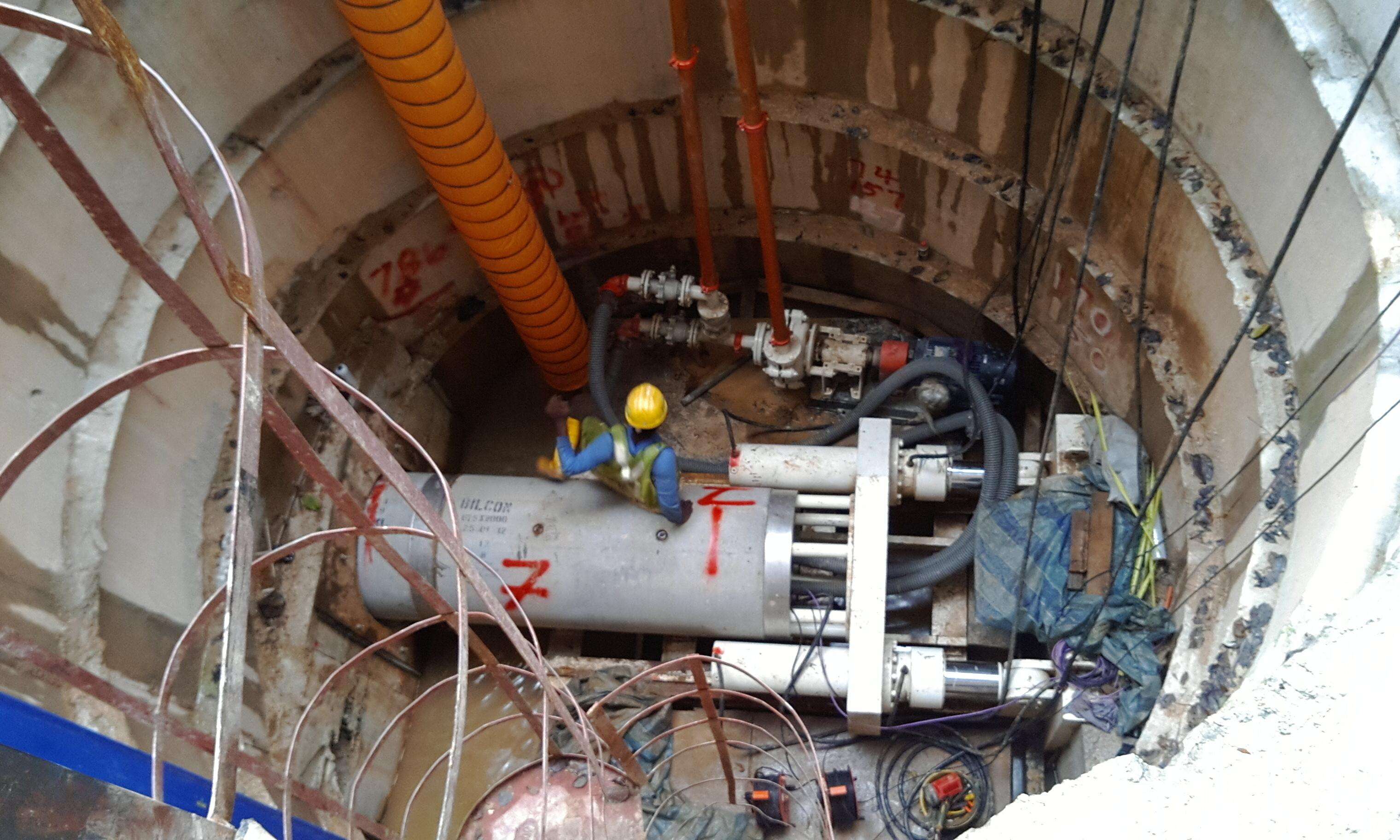
When urban infrastructure projects require the installation of underground pipelines, utility conduits, or drainage systems beneath busy streets, buildings, and sensitive landscapes, the method of excavation becomes critically important. A micro tunnel boring machine has emerged as the preferred solution precisely because it accomplishes this work with an exceptionally minimal impact on the surface above. Unlike conventional open-cut trenching, which tears up roads and disrupts daily life for weeks, this technology drives underground passages through closed, controlled excavation cycles that leave the ground surface essentially undisturbed.

Understanding why a micro tunnel boring machine causes almost no surface disruption requires a closer look at its fundamental design principles, its excavation mechanics, and the ground management techniques it employs throughout the boring process. Each of these elements works together in a tightly integrated system, and together they explain why this equipment has become indispensable for trenchless construction in congested urban environments, ecologically sensitive zones, and technically demanding civil engineering projects around the world.
The Core Engineering Principle Behind Trenchless Operation
Closed-Face Excavation and Continuous Ground Support
The defining characteristic of a micro tunnel boring machine is its closed-face excavation system. Unlike open excavation methods that expose large volumes of soil or rock to the atmosphere, the cutting head of a micro tunnel boring machine operates within a fully enclosed shield. This shield physically separates the excavation zone from the surrounding ground at all times, preventing uncontrolled soil movement that would otherwise propagate upward and cause settlement or heave at the surface.
Continuous ground support is maintained throughout every phase of the boring cycle. As the cutter head advances and removes material, the shield provides immediate structural confinement to the bore face. This means that at no point during operation is there an unsupported void left behind or ahead of the machine. The result is a mechanically stable excavation environment where ground stresses are managed rather than released, which is the primary reason surface disruption remains negligible during the entire drive.
This principle is particularly significant when a micro tunnel boring machine operates in soft or cohesionless soils such as sands, silts, and saturated clays, where even minor stress relief can trigger rapid ground loss. The closed-face design eliminates this risk systematically, giving project engineers the confidence to tunnel beneath critical infrastructure with predictable, controlled outcomes.
Slurry Pressure Balance and Earth Pressure Compensation
Most modern micro tunnel boring machine systems use either slurry pressure balance or earth pressure balance mechanisms to maintain equilibrium at the cutting face. In slurry-mode operation, pressurized bentonite slurry is circulated to the cutting face, where it simultaneously supports the excavation front and transports excavated spoil back to the surface through a closed pipe circuit. This hydraulic balance means that the natural ground pressure is never exceeded and never under-compensated, eliminating the two primary drivers of surface movement: over-excavation and face collapse.
Earth pressure balance variants achieve a similar result by using the excavated material itself, conditioned to a semi-plastic consistency, as the support medium against the cutting face. A screw conveyor regulates the rate of material removal, ensuring that face pressure remains precisely matched to the in-situ ground conditions. In both cases, the micro tunnel boring machine maintains an internal pressure regime that mirrors the surrounding ground, preventing any net stress change that could disturb the overlying surface.
This pressure management capability is one of the most technically sophisticated aspects of micro tunnel boring machine operation and one of the most important reasons why projects in densely built urban areas can proceed without disrupting traffic, utilities, or building foundations located directly above the tunnel alignment.
Pipe Jacking Integration and Structural Continuity
How Segmental Pipe Installation Prevents Void Formation
A micro tunnel boring machine does not simply bore a hole and leave it open. The technology is fundamentally integrated with a pipe jacking system that installs finished pipeline segments directly behind the advancing machine head. As the micro tunnel boring machine moves forward by one pipe length, a new pipe segment is pushed into position from the launch shaft and becomes part of the structural tunnel lining. This continuous process ensures that the annular space left behind the cutter head is immediately occupied by installed pipe, leaving no void that could collapse or allow ground migration.
Void formation is one of the most damaging mechanisms in underground construction. When unsupported voids form and migrate upward through the soil column, the surface above can experience sinkholes, differential settlement, or sudden subsidence. The pipe jacking methodology used with a micro tunnel boring machine inherently prevents this by ensuring structural continuity from the cutting face all the way back to the launch shaft at every stage of the drive.
The result is not just a completed pipeline but a seamlessly installed underground structure that has displaced and supported the surrounding ground throughout its entire length without any interruption to surface conditions. This is why project owners increasingly specify micro tunnel boring machine solutions even when open-cut trenching might be technically feasible, because the risk profile for surface disruption is dramatically lower.
Annular Grouting to Eliminate Tail Voids
Even with immediate pipe installation, a small annular gap inevitably exists between the outside diameter of the installed pipe and the theoretical bore diameter of the cutting head. Left unmanaged, this tail void can allow ground to migrate inward over time, creating delayed surface settlement days or weeks after the micro tunnel boring machine has completed the drive. To address this, grout is injected through ports in the trailing pipe segments to fill the annular space completely as the machine advances.
The grouting process is carefully controlled in terms of both injection pressure and volume to ensure complete void filling without creating excess pressure that could fracture the surrounding ground or cause heave at the surface. When this step is executed correctly, the installed pipeline effectively locks the ground in its original position, and the micro tunnel boring machine leaves behind not just a pipeline but a fully grouted, structurally complete underground corridor that requires no further ground treatment.
This combination of immediate pipe installation and annular grouting is a distinguishing feature of the micro tunnel boring machine methodology and explains why post-construction surface monitoring on these projects typically records settlement figures measured in millimeters rather than centimeters, even in soft ground conditions directly below sensitive structures.
Minimal Footprint at Ground Level
Launch and Reception Shaft Design
One of the most visible differences between a micro tunnel boring machine project and an open-cut excavation is the surface footprint required. Open-cut trenching demands a continuous, fully open trench along the entire pipeline route, which can stretch for hundreds or thousands of meters through an urban environment. A micro tunnel boring machine requires only two localized shaft excavations: one launch shaft from which the machine enters the ground and one reception shaft where it is recovered at the end of the drive.
These shafts are typically small in plan area and are designed using secant piles, sheet piling, or segmental concrete rings to minimize their impact on the surrounding ground. Once the drive is complete, the shafts are backfilled and the surface is reinstated, leaving only minor, localized disturbance footprints rather than a continuous scar through the urban fabric. This characteristic makes the micro tunnel boring machine particularly valuable in situations where surface access is restricted, where road closures must be minimized, or where property owners cannot tolerate extended construction activity along a pipeline corridor.
The compactness of the above-ground support infrastructure, including slurry treatment plants, pipe storage areas, and jacking equipment, also contributes to the low surface disruption profile of a micro tunnel boring machine project. Experienced project teams can configure these support facilities to fit within surprisingly constrained site envelopes, further reducing the visual and physical impact on surrounding areas.
Remote Operation and Guidance Technology
A micro tunnel boring machine is operated entirely from the surface through a remote control and monitoring system. The machine operator does not enter the tunnel during the drive, which eliminates the need for man-access infrastructure, ventilation shafts, and the larger bore diameters that manned tunneling systems require. Smaller bore diameters mean less material removal, lower jacking forces, and less disturbance to the ground mass surrounding the tunnel, all of which translate directly into reduced surface impact.
Laser theodolite guidance systems continuously track the position and alignment of the micro tunnel boring machine head with millimeter precision, relaying real-time positional data to the surface operator. Steering corrections are made through differential thrust adjustments on the articulated cutter head, allowing the machine to follow its designed alignment with exceptional accuracy. This precision reduces the risk of unplanned deviations that could bring the machine closer to sensitive utilities or structures and helps ensure that the ground disturbance envelope remains within predicted tolerances throughout the drive.
The combination of remote operation and precision guidance makes the micro tunnel boring machine a uniquely controllable construction tool, where human judgment and machine capability are seamlessly integrated to achieve consistently low-disruption outcomes regardless of ground conditions or surrounding infrastructure complexity.
Ground Condition Adaptability and Disruption Prevention
Performance in Rock Conditions
While much discussion of micro tunnel boring machine technology focuses on soft ground applications, these machines are equally effective in hard rock conditions, where a full-face rotary cutter head equipped with disc cutters engages the rock mass in a controlled, progressive manner. In rock, the primary disruption mechanism is vibration transmitted from the cutting process into the surrounding formation. A well-designed micro tunnel boring machine manages this through optimized cutterhead rotation speeds, appropriate thrust force calibration, and the use of cutting tools matched precisely to the rock's unconfined compressive strength and abrasivity characteristics.
Because the micro tunnel boring machine cuts rock mechanically rather than blasting it, the ground disturbance envelope is confined to the immediate vicinity of the cutter head. There are no shock waves propagating through the rock mass to disturb overlying foundations or sensitive equipment. This makes the micro tunnel boring machine the preferred method for tunneling beneath hospitals, data centers, historic structures, and other facilities where vibration limits are strictly enforced by structural engineers or facility managers.
In mixed-face conditions, where the cutter head simultaneously encounters soil and rock, the micro tunnel boring machine's closed-face design prevents differential erosion of the softer material while the harder material is being cut, which is a common cause of sudden surface settlement in shallow urban tunnels. This versatility across ground conditions is a key reason the micro tunnel boring machine has become such a widely adopted technology in geologically diverse urban environments.
Lubrication Systems and Friction Reduction
As pipe lengths increase and jacking forces rise, the friction between the outside of the installed pipe string and the surrounding ground increases proportionally. Without management, this friction can cause the pipe string to deflect, induce lateral loads into the surrounding ground, or generate sufficient stress to disturb the soil structure above the tunnel alignment. A micro tunnel boring machine installation incorporates bentonite lubrication injection at multiple points along the pipe string to reduce skin friction to manageable levels throughout the drive.
This lubrication not only reduces jacking loads but also creates a thin, pressurized annular film around the pipe that acts as an additional buffer between the installed pipeline and the surrounding ground. This film prevents direct pipe-to-ground contact that could cause localized stress concentrations and maintains the structural integrity of the bored alignment throughout the jacking operation. The result is a smoother, more controlled drive that minimizes secondary ground disturbance from friction-related soil displacement.
The use of intermediate jacking stations on longer drives further distributes jacking loads along the pipeline and prevents the accumulation of excessive force at any single point in the pipe string, reducing the risk of pipe deflection or ground disturbance caused by localized overloading. All of these measures reflect the systematic, engineered approach to disruption prevention that defines the micro tunnel boring machine methodology.
Comparison with Alternative Installation Methods
Why Open-Cut Trenching Creates Far Greater Disruption
To fully appreciate why a micro tunnel boring machine causes almost no surface disruption, it is useful to understand what conventional open-cut trenching involves and why its disruption profile is so much higher. Open-cut trenching requires complete removal of the surface pavement or ground cover, excavation of a trench to the required pipeline depth, installation of the pipeline, backfilling with selected granular material, compaction, and surface reinstatement. Every one of these steps creates visible, prolonged disruption to the surface environment.
Beyond the immediate physical disruption, open-cut trenching also introduces long-term settlement risks from inadequate compaction of backfill material, which can cause pavement depressions to develop over months or years after construction is complete. Road reinstatement is rarely as structurally sound as the original pavement, and utility trench failures are among the most common causes of urban road surface deterioration. None of these post-construction settlement mechanisms apply to a pipeline installed using a micro tunnel boring machine, because no surface material is disturbed along the pipeline route.
The social and economic costs of open-cut disruption, including traffic delays, business revenue losses, emergency service impediments, and community stress, are also entirely avoided when a micro tunnel boring machine is used. These indirect costs are increasingly being quantified by municipal authorities and factored into project selection decisions, further strengthening the business case for micro tunnel boring machine solutions in urban infrastructure renewal programs.
Advantages Over Other Trenchless Methods
The micro tunnel boring machine is not the only trenchless installation method available, but it offers specific advantages over alternatives such as horizontal directional drilling and pipe ramming that are directly relevant to surface disruption control. Horizontal directional drilling, while effective for certain utility crossings, can cause significant ground disturbance through a phenomenon known as inadvertent returns, where drilling fluid escapes to the surface under pressure. This risk is particularly acute in cohesionless soils and can result in surface contamination and unexpected ground heave.
Pipe ramming, which drives a steel casing through the ground using percussive force, generates vibration and ground displacement that can disturb sensitive utilities, structures, and ground surfaces in its vicinity. It also lacks the steering precision of a micro tunnel boring machine, making it unsuitable for tight alignments or installations where position tolerances must be maintained within millimeters. The micro tunnel boring machine avoids both of these disruption mechanisms through its pressure-balanced, steerable, closed-face design, which is why it is often specified for the most demanding trenchless applications where surface disruption tolerance is effectively zero.
For projects requiring precise alignment control, predictable ground behavior management, and guaranteed minimal surface impact across a wide range of ground conditions, the micro tunnel boring machine represents the most technically reliable solution currently available in the trenchless construction industry.
FAQ
How deep does a micro tunnel boring machine need to be to avoid surface disruption?
While a micro tunnel boring machine can operate at relatively shallow depths, the risk of surface disruption decreases as cover depth increases. In soft ground, a minimum cover of 1.5 to 2.0 times the tunnel diameter is generally recommended to maintain adequate arching effect above the cutter head. In harder ground conditions, shallower cover can be tolerated. Experienced geotechnical engineers assess site-specific conditions and use settlement prediction models to confirm acceptable cover depths before any micro tunnel boring machine drive commences.
Can a micro tunnel boring machine operate directly beneath existing buildings or foundations?
Yes, a micro tunnel boring machine can be designed and operated to pass directly beneath existing foundations, provided that the ground conditions are assessed carefully, appropriate face pressure controls are implemented, and the alignment is engineered to maintain adequate clearance from structural elements. Pre-construction surveys and real-time settlement monitoring are standard practice on such projects. The closed-face, pressure-balanced design of the micro tunnel boring machine makes it one of the safest methods for underpassing sensitive structures.
What monitoring is used to confirm that a micro tunnel boring machine drive is not causing surface movement?
Surface settlement arrays consisting of precise leveling points installed in pavements, structures, and utility boxes are monitored before, during, and after a micro tunnel boring machine drive. Automated total stations and ground movement monitors can provide real-time data to site engineers. Trigger levels are pre-agreed with the client and affected parties, and if readings approach these thresholds, operational parameters on the micro tunnel boring machine can be adjusted immediately to address any developing trend before surface disruption occurs.
Is a micro tunnel boring machine suitable for all soil and rock types?
Modern micro tunnel boring machine designs are available for a wide range of ground conditions, from very soft clays and waterlogged sands to hard rock with high unconfined compressive strength. The selection of the appropriate machine type, cutterhead configuration, and ground conditioning approach is based on a thorough site investigation and geotechnical assessment. In particularly challenging mixed-face or highly abrasive ground conditions, specialist cutter designs and enhanced wear monitoring systems are employed to ensure continuous, disruption-free performance throughout the drive.
Table of Contents
- The Core Engineering Principle Behind Trenchless Operation
- Pipe Jacking Integration and Structural Continuity
- Minimal Footprint at Ground Level
- Ground Condition Adaptability and Disruption Prevention
- Comparison with Alternative Installation Methods
-
FAQ
- How deep does a micro tunnel boring machine need to be to avoid surface disruption?
- Can a micro tunnel boring machine operate directly beneath existing buildings or foundations?
- What monitoring is used to confirm that a micro tunnel boring machine drive is not causing surface movement?
- Is a micro tunnel boring machine suitable for all soil and rock types?