
 EN
EN
 AR
AR BG
BG HR
HR CS
CS FR
FR DE
DE EL
EL HI
HI IT
IT JA
JA KO
KO RO
RO RU
RU ES
ES TL
TL ID
ID LT
LT SK
SK SL
SL UK
UK VI
VI ET
ET TH
TH TR
TR FA
FA AF
AF MS
MS HY
HY AZ
AZ KA
KA BN
BN LO
LO LA
LA MN
MN NE
NE MY
MY KK
KK UZ
UZ KY
KY
The rock pipe jacking machine disc cutter is one of the most mechanically demanding components in any trenchless construction operation. Operating under extreme compressive forces, abrasive rock surfaces, and continuous rotational stress, the disc cutter endures conditions that would rapidly degrade poorly maintained equipment. For contractors and tunnel engineers who depend on consistent performance, understanding what daily maintenance truly extends the service life of this critical tool is not optional — it is a core operational discipline that directly impacts project timelines, cost control, and equipment longevity.
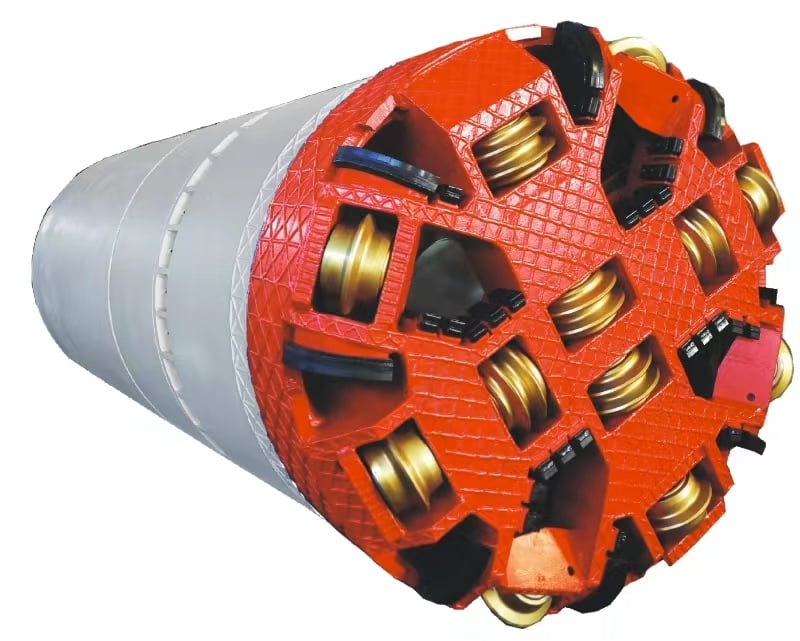
Daily maintenance of a rock pipe jacking machine disc cutter is not simply about cleaning the cutterhead at the end of a shift. It involves a structured, repeatable inspection and servicing routine that targets the specific failure modes most commonly seen in rock jacking environments. From bearing integrity to ring wear patterns, from seal condition to cutter spacing alignment, each element of the daily maintenance cycle contributes to a measurable extension of the disc cutter's operational lifespan. This article breaks down precisely what that maintenance should include and why each step matters.
Understanding Why Disc Cutters Degrade Faster Without Daily Attention
The Unique Stress Environment of Rock Jacking Operations
Unlike soft ground tunneling, rock pipe jacking machine disc cutter applications involve direct mechanical engagement with hard, abrasive geological formations. Each rotation subjects the disc cutter ring to point loading forces that can reach thousands of kilonewtons depending on formation hardness. Without daily inspection, micro-cracks in the cutter ring can propagate undetected, eventually causing sudden ring failure that damages adjacent cutters and the cutterhead body itself.
Vibration is another compounding factor. In dense rock formations, impact-induced vibration transmits through the cutter shaft and into the bearing assembly. This vibration accelerates bearing wear, loosens retaining hardware, and degrades the sealing system that protects internal bearing components from slurry and rock particle intrusion. Daily attention to vibration-related wear indicators is what separates proactive teams from those who face unplanned stoppages.
The slurry environment inside a rock condition pipe jacking machine also plays a role. Even in rock formation tunneling, slurry is used for face support and material transport. If seal integrity on the rock pipe jacking machine disc cutter degrades even slightly, abrasive fine particles infiltrate the bearing housing. A small seal failure caught during daily inspection requires a simple seal replacement; a failure left unaddressed for multiple shifts typically means full bearing replacement and potential spindle damage.
The Cumulative Cost of Skipped Daily Maintenance
Many operators underestimate how quickly wear accumulates on a rock pipe jacking machine disc cutter when daily routines are inconsistently applied. A single missed inspection cycle may seem inconsequential. However, in hard rock jacking conditions, wear rates on cutter rings can be significant even within a single shift, and a cutter ring that has worn beyond its serviceable profile generates abnormally high lateral forces that transfer stress to neighboring cutters.
This cascading effect is one of the most expensive outcomes in disc cutter maintenance. When one rock pipe jacking machine disc cutter fails mid-drive, the machine must be stopped, the cutterhead accessed — sometimes under pressurized conditions — and multiple cutters replaced rather than just one. The labor, downtime, and material cost of this scenario vastly exceed the time investment of a structured daily maintenance program.
Core Daily Inspection Tasks That Directly Extend Disc Cutter Life
Visual and Tactile Ring Wear Assessment
The first step in any effective daily maintenance routine for a rock pipe jacking machine disc cutter is a systematic visual and tactile inspection of the cutter ring itself. The ring should be examined for flat spots, which indicate cutter rotation has stopped — a condition known as cutter lock-up. A locked disc cutter wears a flat profile very rapidly and loses its ability to effectively fracture rock, dramatically increasing thrust forces on the entire machine.
Operators should also measure ring wear using calipers or a dedicated wear gauge. Most manufacturers specify a maximum allowable wear depth before replacement is required. Recording these measurements daily allows maintenance teams to track wear rate trends, identify cutters that are wearing faster than expected due to off-center loading or improper installation, and schedule replacement during planned maintenance windows rather than emergency stoppages.
Chipping or spalling on the ring edge is another indicator requiring immediate attention. A chipped rock pipe jacking machine disc cutter ring does not distribute load evenly and can cause impact stress concentrations that accelerate bearing damage. Identifying chipped rings during daily inspection allows their removal before secondary damage occurs.
Bearing Condition Monitoring and Lubrication
The bearing assembly is the heart of every rock pipe jacking machine disc cutter. Tapered roller bearings are typically used because they can handle both radial and axial loads simultaneously, which is essential in rock cutting applications. Daily maintenance should include checking for excessive play in the cutter disc by attempting to rock it manually on its axis. Any detectable axial or radial play beyond design tolerance is a strong indicator of bearing wear or seal failure.
Lubrication replenishment is a non-negotiable daily task. Most disc cutter bearing assemblies use grease lubrication, and the specified regreasing interval in rock formation applications is typically daily or every shift due to the elevated heat and load cycles. Using the correct grease specification — matching viscosity, temperature range, and extreme pressure additive content — is as important as the greasing frequency itself. Substituting a lower-grade lubricant to save cost is a false economy that accelerates bearing degradation in the rock pipe jacking machine disc cutter assembly.
After regreasing, observing whether old grease purges from the relief port confirms that fresh lubricant has actually reached the bearing races. If no purge occurs, the grease pathway may be blocked by hardened lubricant or debris, and the port should be cleaned and tested before the machine resumes operation.
Seal Integrity and Contamination Prevention
Daily Seal Inspection Protocols
Seals on a rock pipe jacking machine disc cutter serve as the primary barrier between the aggressive slurry-and-rock-particle environment outside the cutter and the precision bearing components inside. Daily seal inspection involves looking for visible leakage of grease from the seal area — which indicates outward seal failure — and watching for discoloration or contamination in the purged grease — which suggests inward infiltration of slurry or water.
Face seals, also called floating seals or mechanical seals, are commonly used in heavy-duty disc cutter designs. These seals consist of two hardened metal rings lapped to a mirror finish and held in contact by elastomeric O-rings. During daily maintenance, the O-rings should be checked for cracking, swelling, or deformation, as these are the first components to degrade under chemical exposure from slurry additives or high operating temperatures.
Replacing a damaged seal on a rock pipe jacking machine disc cutter during a planned daily maintenance window takes a fraction of the time required to perform the same replacement after a bearing failure caused by that seal's neglect. Seal replacement intervals should also be logged, as premature seal failure in the same cutter position repeatedly may indicate a misalignment issue or excessive side loading that must be addressed at the cutterhead design level.
Preventing Slurry Intrusion Through Pressure Management
In rock condition slurry balance pipe jacking operations, the slurry chamber pressure must be carefully managed to avoid creating differential pressure conditions that force slurry past the cutter seals. If the slurry pressure significantly exceeds the internal grease pressure in the disc cutter bearing cavity, contamination will occur regardless of seal condition. Daily maintenance should therefore include verifying that the grease pressure maintenance system — if equipped — is functioning correctly and that the pressure differential across each rock pipe jacking machine disc cutter seal is within the manufacturer's specified range.
Some advanced cutter designs incorporate pressure-compensating grease systems that automatically maintain positive internal pressure relative to the slurry chamber. For machines equipped with this feature, daily checks should confirm that the compensator reservoir is filled to the correct level and that no faults are recorded on the pressure monitoring system. This is a simple but highly effective daily task that significantly extends the operational life of each rock pipe jacking machine disc cutter on the cutterhead.
Hardware Integrity and Cutter Positioning Verification
Fastener Torque Checks and Cutter Housing Inspection
The mechanical connection between a rock pipe jacking machine disc cutter and the cutterhead is maintained by high-strength bolts and precision-machined housing blocks. Vibration in hard rock applications is notorious for loosening fasteners, even those installed with correct torque specifications and thread-locking compounds. A daily torque check on all accessible cutter housing fasteners is a simple, quick task that prevents the severe damage that results from a cutter working loose during operation.
A loose rock pipe jacking machine disc cutter does not simply fall out. Instead, it oscillates in its housing, producing impact loads on the housing walls, enlarging bolt holes, and generating bending stress on the cutter shaft. The housing itself can become permanently deformed, requiring expensive cutterhead repairs that are entirely avoidable through consistent fastener verification.
The cutter housing should also be visually inspected for cracks, erosion from abrasive material, and any signs of weld fatigue in fabricated cutterheads. Cracks in the housing propagate under cyclic loading and can lead to sudden structural failure of the cutterhead in extreme cases. Early detection during daily rounds allows for planned weld repair or housing replacement before the damage reaches a critical threshold.
Cutter Spacing and Profile Geometry Verification
The geometric arrangement of cutters on the cutterhead — specifically the spacing between adjacent disc cutters — is a critical parameter for efficient rock fracturing. As cutters wear, the effective cutting radius decreases, and if replacement is not performed in a timely manner, the spacing profile changes in ways that increase required thrust force and reduce penetration efficiency. Daily measurement and logging of each rock pipe jacking machine disc cutter's effective diameter enables the maintenance team to plan cutter exchanges before performance degradation becomes operationally significant.
Mixed wear profiles across the cutterhead — where some disc cutters have been replaced recently and others are near end-of-life — create uneven load distribution that stresses both the newer and older cutters disproportionately. A well-maintained daily log allows the team to implement a cutter rotation and replacement strategy that keeps the overall cutterhead wear profile as uniform as possible, maximizing the service life of every rock pipe jacking machine disc cutter on the machine.
Documentation, Trend Analysis, and Maintenance Planning
Building a Daily Maintenance Log That Adds Real Value
A daily maintenance routine for a rock pipe jacking machine disc cutter is only as valuable as the records it generates. Each inspection, measurement, lubrication event, and replacement should be documented with date, shift, machine operating hours, geological formation encountered, and the specific findings for every cutter position. Over time, this log becomes a powerful diagnostic tool that reveals patterns invisible in single-shift data.
For example, if a particular cutter position consistently shows accelerated ring wear compared to adjacent positions, the log data provides the evidence needed to investigate whether a local geology variation, a cutterhead imbalance issue, or a misaligned cutter housing is responsible. Without systematic logging, these patterns go unrecognized and the root cause is never addressed, leading to repeated premature failures of the rock pipe jacking machine disc cutter at that position.
Maintenance logs also support warranty claims, equipment certification audits, and project handover documentation. For contractors operating multiple machines or working on publicly tendered infrastructure projects, demonstrating a documented daily maintenance program for each rock pipe jacking machine disc cutter is increasingly a contractual requirement rather than merely good practice.
Using Maintenance Data to Schedule Proactive Cutter Exchanges
The ultimate goal of daily maintenance data collection is to enable proactive, rather than reactive, cutter exchange scheduling. When the maintenance team knows the average wear rate of each rock pipe jacking machine disc cutter based on formation type and jacking distance, they can accurately predict when replacements will be needed and prepare the necessary components in advance. This eliminates the emergency procurement situations that add significant cost and delay to projects.
Proactive scheduling also allows cutter exchanges to be timed with other planned maintenance activities, minimizing total machine downtime. Rather than stopping the machine separately for a disc cutter replacement, a cutter change can be combined with a scheduled cutterhead cleaning, bearing housing inspection, or wear plate replacement. This integrated approach to maintenance planning, grounded in daily data collection, is what distinguishes high-performing pipe jacking operations from those that struggle with unpredictable equipment costs.
FAQ
How often should the bearings on a rock pipe jacking machine disc cutter be regreased?
In active rock jacking conditions, bearings on a rock pipe jacking machine disc cutter should typically be regreased every shift or at minimum once per day. The high loads, elevated temperatures, and vibration levels in rock formation jacking consume grease rapidly compared to softer ground applications. Always refer to the specific machine manufacturer's specifications, as the required regreasing volume and interval may vary based on cutter design and formation hardness.
What is the most common cause of premature disc cutter failure in rock pipe jacking?
Seal failure leading to bearing contamination is the most frequently cited cause of premature rock pipe jacking machine disc cutter failure. When abrasive rock particles and slurry infiltrate the bearing assembly, they cause rapid bearing wear that escalates into full bearing seizure if not detected. Daily seal inspection and consistent grease pressure management are the most effective preventive measures against this failure mode.
Can a worn disc cutter ring damage other components on the cutterhead?
Yes. A significantly worn or locked-up rock pipe jacking machine disc cutter transfers abnormal thrust and lateral forces to adjacent cutters and to the cutterhead body itself. This cascade effect can accelerate wear on neighboring cutters, damage cutter housing blocks, and in severe cases cause structural stress on cutterhead ribs and welds. Daily ring wear measurement and timely replacement are essential to preventing this type of collateral damage.
How does formation geology affect the daily maintenance requirements for disc cutters?
Harder and more abrasive formations increase wear rates on both the cutter ring and internal bearing components, requiring more frequent inspection intervals and shorter replacement cycles. Mixed-face conditions — where the rock pipe jacking machine disc cutter encounters alternating hard rock and softer material — also increase impact loading and bearing stress. When formation conditions change during a drive, maintenance teams should recalibrate their inspection frequency and wear measurement schedule accordingly rather than relying on averages established in different geological conditions.
Table of Contents
- Understanding Why Disc Cutters Degrade Faster Without Daily Attention
- Core Daily Inspection Tasks That Directly Extend Disc Cutter Life
- Seal Integrity and Contamination Prevention
- Hardware Integrity and Cutter Positioning Verification
- Documentation, Trend Analysis, and Maintenance Planning
-
FAQ
- How often should the bearings on a rock pipe jacking machine disc cutter be regreased?
- What is the most common cause of premature disc cutter failure in rock pipe jacking?
- Can a worn disc cutter ring damage other components on the cutterhead?
- How does formation geology affect the daily maintenance requirements for disc cutters?