
 EN
EN
 AR
AR BG
BG HR
HR CS
CS FR
FR DE
DE EL
EL HI
HI IT
IT JA
JA KO
KO RO
RO RU
RU ES
ES TL
TL ID
ID LT
LT SK
SK SL
SL UK
UK VI
VI ET
ET TH
TH TR
TR FA
FA AF
AF MS
MS HY
HY AZ
AZ KA
KA BN
BN LO
LO LA
LA MN
MN NE
NE MY
MY KK
KK UZ
UZ KY
KY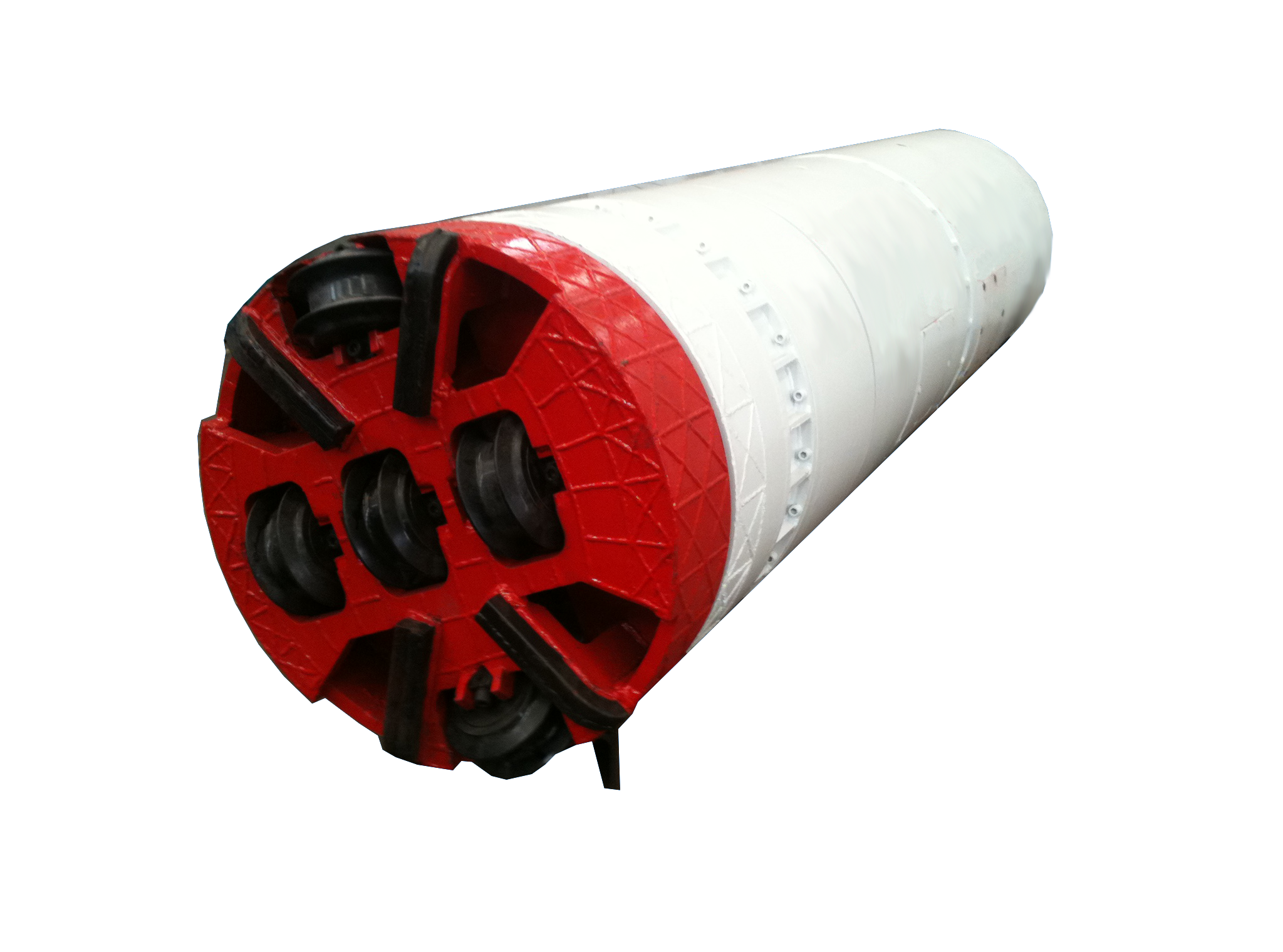
Selecting the right cutter head for a rock pipe jacking machine operating in granite conditions is one of the most critical engineering decisions on any underground utility project. Granite is among the hardest and most abrasive geological formations a trenchless contractor will encounter, and the wrong cutter head configuration can lead to premature tool wear, project delays, costly downtime, and even catastrophic equipment failure deep underground. Understanding how geology, machine design, and cutting tool geometry interact is essential before committing to a specific configuration.
A well-matched cutter head does more than simply cut through rock — it controls face stability, manages cuttings transport, balances earth pressure at the tunnel face, and ultimately determines how efficiently the entire boring cycle performs. In granite applications specifically, the demands placed on cutter head components are significantly more extreme than in soft soil or mixed ground conditions. This guide walks through the key factors engineers, project managers, and equipment procurement teams must evaluate when choosing the right cutter head configuration for a rock pipe jacking machine in granite terrain.
Understanding Granite as a Jacking Medium
The Mechanical Properties That Define the Challenge
Granite is an igneous rock characterized by exceptional compressive strength, typically ranging between 100 MPa and 250 MPa or higher, combined with high abrasiveness due to its significant quartz content. Quartz minerals are harder than most steel alloys commonly used in cutter heads, which means abrasive wear becomes the dominant failure mode rather than impact fracture. For any rock pipe jacking machine operating in this environment, understanding these physical properties at the design stage is non-negotiable.
The brittleness index of granite also plays a significant role. Unlike ductile materials that deform under load, granite fractures along cleavage planes and grain boundaries. A cutter head designed to exploit this fracture mechanism — rather than attempting to shear the material — will perform substantially better and consume far less energy per meter of advance. Engineers should obtain representative core samples and conduct Cerchar abrasivity index (CAI) tests, Brazilian tensile strength tests, and uniaxial compressive strength (UCS) measurements before specifying cutter head tooling.
Additionally, granite frequently contains discontinuities such as joints, fractures, and dyke intrusions that change ground behavior unpredictably along the drive alignment. These variations mean that a cutter head specification based solely on average UCS values may still encounter unexpected conditions mid-drive. Selecting a cutter head with adaptable tooling geometry and robust structural design helps the rock pipe jacking machine maintain stable performance even when rock quality fluctuates.
Geological Investigation Before Cutter Head Selection
Thorough geotechnical investigation is the foundation of correct cutter head selection. Borehole drilling along the proposed drive alignment should be conducted at intervals close enough to capture meaningful variation in rock mass quality. Rock Quality Designation (RQD) values, joint spacing data, and groundwater conditions should all be incorporated into the cutter head design brief submitted to the machine manufacturer or tooling supplier.
Understanding the depth of weathering is particularly important in granite zones. Weathered granite at the crown of the drive may behave more like a stiff clay, while fresh granite at the invert remains extremely hard. A slurry balance rock pipe jacking machine with a properly specified cutter head must be able to handle this transition without face collapse at the softer section or tool failure at the harder section. The geotechnical report should explicitly characterize each geological layer the machine is expected to intersect.
Core Cutter Head Types Used in Granite Applications
Disc Cutter Configurations
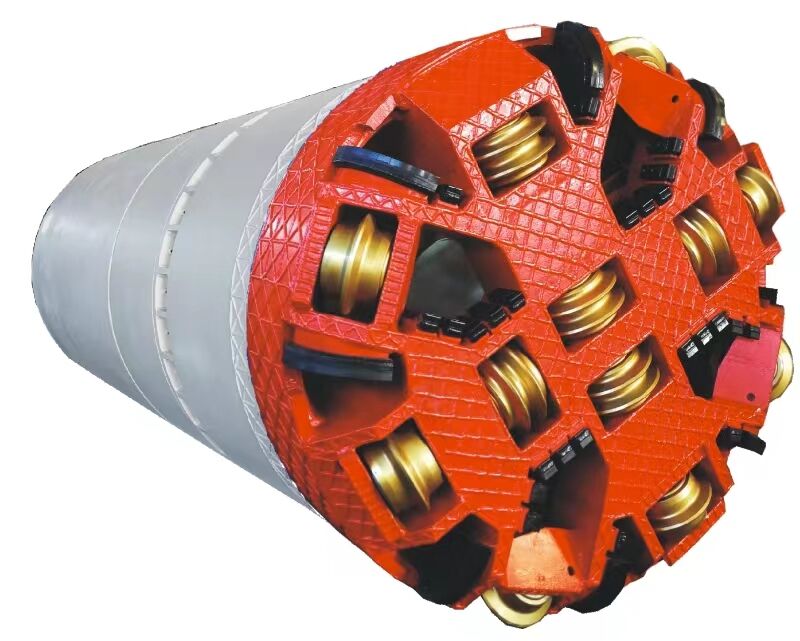
Disc cutters — particularly single-disc and double-disc rolling cutters — are the standard tooling choice for hard rock rock pipe jacking machine applications. These tools work by applying concentrated point loads to the granite face, inducing tensile cracking between adjacent cutter tracks and allowing chips of rock to break free. This mechanism is highly energy-efficient in competent granite compared to drag bits, which rely on shear and are rapidly consumed by abrasive minerals.
The spacing between disc cutters on the cutter head face is a critical design variable. Incorrect spacing leads either to over-grinding, where material is reduced to fine powder rather than chips, or under-chipping, where the tensile crack propagation between adjacent cutters does not connect efficiently. Both scenarios increase specific energy consumption and reduce penetration rate per revolution. For granite with UCS above 150 MPa, disc cutter spacing in the range of 70 mm to 90 mm is commonly applied, though this should be confirmed through rolling cutter performance modeling specific to the rock type.
The disc diameter also affects bearing load capacity and cutter life. Larger diameter discs distribute load over a wider contact arc, reducing peak contact stress at the rock interface and extending service life. Most purpose-built hard rock rock pipe jacking machine platforms use disc diameters between 432 mm (17 inches) and 483 mm (19 inches), though smaller machines used in pipe jacking may incorporate scaled-down versions appropriate to the bore diameter and available thrust force.
Carbide Insert Bits and Scrapers for Transitional Ground
In projects where the drive alignment transitions from weathered granite or mixed alluvial material into competent rock, relying solely on disc cutters may leave the cutter head poorly equipped for softer sections. Hybrid cutter head designs combine disc cutters with carbide-tipped drag bits or scraper tools positioned at the gauge ring and central zone. This approach allows the rock pipe jacking machine to remain productive across variable ground without requiring a mid-drive tool change.
Carbide insert bits are typically tungsten carbide-tipped and are designed to withstand impact loads while maintaining cutting edge integrity under moderate abrasion. In transitional ground, these tools remove disaggregated material efficiently while the disc cutters handle any competent rock bands encountered. The mix ratio of disc cutters to drag bits should be determined based on the proportion of rock versus soil expected along the drive — a predominately granite drive warrants a disc-cutter-dominant configuration with supplementary scrapers, not the reverse.
Key Design Parameters of the Cutter Head for Granite Conditions
Face Coverage and Opening Ratio
The opening ratio of a cutter head — the proportion of open area versus solid structural area on the cutting face — directly affects both cuttings ingestion efficiency and face stability management. In granite, the challenge is that rock chips tend to be coarse and angular, demanding larger openings to prevent blockage inside the cutting chamber of the rock pipe jacking machine. However, excessively large openings in fractured or partially weathered rock can compromise face stability, especially when operating under high hydrostatic pressure.
A well-designed cutter head for granite applications typically features a face opening ratio between 25% and 35%. The openings should be shaped and positioned to accept broken rock chips from disc cutter tracks and channel them efficiently toward the center-mounted agitator or mixing zone where slurry suspension begins. Poorly designed opening geometry creates preferential ingestion zones that cause uneven wear on cutter head spoke structures and can lead to clogging under certain rock chip gradations.
Structural Reinforcement and Material Selection
The body of a cutter head for granite applications must be engineered for both fatigue resistance and abrasion resistance simultaneously. The spoke and face plate structures absorb cyclic bending moments generated by disc cutter impact reactions, while all exposed surfaces experience constant abrasive wear from moving granite particles. Using wear-resistant steel alloys such as Hardox or equivalent grades for the face plates and spoke leading edges significantly extends operational life before structural maintenance is needed.
Cutter housing seats — the machined pockets that hold disc cutter assemblies in the cutter head body — must be manufactured to tight tolerances and reinforced with hardened steel inserts. Any looseness in the cutter seat accelerates fretting wear and can allow individual cutters to migrate out of alignment under hard rock loading, dramatically increasing the risk of cutter loss deep in the drive. When evaluating a rock pipe jacking machine for granite projects, engineers should ask manufacturers specifically about cutter seat hardness specifications, retention system design, and change-out access provisions.
Rotation Speed and Torque Matching
Cutter head rotation speed and available torque must be carefully matched to the disc cutter design and the expected granite strength. In general, lower rotation speeds — combined with high thrust and torque — produce larger rock chips and better penetration per revolution in hard granite. Higher rotation speeds may be acceptable in softer or weathered granite but tend to increase heat generation at the disc cutter bearings and accelerate abrasive wear on structural surfaces in competent rock.
The drive system of the rock pipe jacking machine must be capable of sustaining torque at the reduced speeds required for granite, not just achieving peak torque momentarily. Variable frequency drive (VFD) systems allow operators to tune rotation speed in real time based on observed penetration rate and torque feedback, which is a valuable capability on complex granite drives where rock strength varies. Specifying a machine with VFD-equipped cutter head drive motors gives project teams greater operational flexibility and tool life optimization potential.
Slurry Management and Cuttings Transport Considerations
Slurry Formulation for Granite Chip Transport
Unlike soft-ground tunneling where bentonite slurry primarily provides face support, in a hard rock rock pipe jacking machine application the slurry circuit must efficiently transport coarse, angular granite chips from the cutting face back to the separation plant on the surface. The rheological properties of the slurry — particularly its viscosity and yield strength — must be sufficient to keep granite particles in suspension during transport through the slurry line without settling and causing blockages.
Granite cuttings are significantly denser than clay or sand particles, requiring higher slurry flow velocities to maintain transport. The slurry pump specification, pipe diameter, and flow rate should all be engineered with this in mind. Oversized particles generated by inefficient disc cutter operation — due to incorrect spacing or worn tooling — can overwhelm even well-designed slurry systems, which is another reason why getting the cutter head specification right from the outset is so important for overall project performance.
Chamber Pressure Management at the Face
Maintaining stable chamber pressure at the cutting face prevents both blowout in high-permeability fractured granite zones and face collapse in weathered sections. Slurry balance machines rely on precise control of inlet and outlet slurry flow rates to maintain target face pressure. The cutter head design must be compatible with this pressure management regime — specifically, the openings and mixing chamber geometry must allow slurry to reach and pressurize the entire cutting face area without creating pressure shadow zones behind solid structural members.
A rock pipe jacking machine designed specifically for rock conditions typically incorporates an enlarged mixing chamber and strategically positioned injection ports that ensure even slurry distribution across the face, maintaining consistent chamber pressure regardless of local cutter head orientation. This design detail is often overlooked when evaluating machines but has significant practical implications for drive stability in heterogeneous granite conditions.
Operational and Maintenance Factors Affecting Cutter Head Selection
Tool Change Access and Intervention Planning
In granite drives of significant length, disc cutter wear is inevitable and planned tool changes must be factored into the project schedule. The ability to change tools safely and efficiently — ideally from behind the cutter head within the machine — is a practical requirement that must influence cutter head design selection. Some cutter head designs require full face access from the front, which in pressurized granite conditions may demand hyperbaric intervention, a costly and time-sensitive operation.
Modern rock pipe jacking machine cutter heads increasingly incorporate back-loading cutter designs, where disc cutter assemblies can be withdrawn and replaced from within the cutting chamber without personnel exposure to the pressurized face. This capability dramatically reduces intervention risk and duration, particularly in deep drives with high groundwater pressure. When selecting a cutter head, project teams should explicitly evaluate whether the design supports back-loading and whether the machine body provides adequate working space behind the cutter head for the required tool-change operations.
Instrumentation and Real-Time Monitoring
Equipping the rock pipe jacking machine with comprehensive real-time monitoring instrumentation allows operators to detect cutter wear, bearing overheating, and abnormal loading patterns before they escalate into failures. Cutter head designs that incorporate sensor ports or instrument passages in cutter housing designs provide much greater diagnostic capability than those that do not. Torque trends, individual cutter rotation monitoring via RFID-tagged bearings, and temperature telemetry from critical bearing housings all contribute to predictive maintenance programs that keep granite drives on schedule.
Data collected from instrumentation during early drive sections can be analyzed to calibrate cutter life prediction models for the specific granite encountered on that project, enabling more accurate tool change interval planning for the remainder of the drive. This data-driven approach reduces both the risk of unplanned cutter loss — where a broken disc impacts the cutter head structure or adjacent tools — and the cost of over-frequent planned interventions. Treating instrumentation as a core component of cutter head system selection rather than an optional upgrade is a hallmark of technically mature project delivery on hard rock rock pipe jacking machine projects.
FAQ
What is the most important factor when choosing a cutter head for granite pipe jacking?
The most important factor is matching the cutter head tooling type and configuration to the specific mechanical properties of the granite, particularly its uniaxial compressive strength (UCS) and Cerchar abrasivity index (CAI). Disc cutters are generally preferred for competent granite above 100 MPa UCS due to their ability to exploit tensile fracture mechanics rather than shear, which reduces energy consumption and tool wear. Without accurate geotechnical characterization, no cutter head specification can be reliably optimized for the project conditions.
Can a standard soft-ground cutter head be used on a rock pipe jacking machine in granite?
No. Standard soft-ground cutter heads equipped with drag bits or flat scrapers are not suitable for competent granite. These tools rely on shear cutting mechanisms that are overwhelmed by the hardness and abrasiveness of granite minerals, leading to rapid tool failure and potential structural damage to the cutter head body. A dedicated hard rock cutter head with rolling disc cutters, reinforced structural members, and appropriately designed opening geometry is required for safe and productive operation in granite conditions.
How often do disc cutters need to be replaced on a granite drive?
Disc cutter change intervals on granite drives depend on rock abrasivity, disc cutter diameter, applied thrust, and rotation speed. In high-abrasivity granite with a CAI above 3, disc cutter ring wear may require inspection or replacement every 30 to 80 meters of advance for a typical pipe jacking diameter. Establishing a cutter monitoring program early in the drive — through regular intervention inspections and wear measurement — allows teams to calibrate change intervals to the actual rock conditions encountered rather than relying on generic estimates.
What role does slurry play in protecting the cutter head in granite conditions?
Slurry serves multiple protective and operational functions in a rock pipe jacking machine application in granite. It cools the disc cutter bearings and cutter head face, reducing thermal fatigue; it suspends and transports broken granite chips away from the cutting chamber; and it maintains face pressure stability to prevent ground collapse or blowout. Properly formulated slurry with the right viscosity and flow rate also helps flush wear debris from cutter seats and structural surfaces, reducing secondary abrasive damage to the cutter head body.
Table of Contents
- Understanding Granite as a Jacking Medium
- Core Cutter Head Types Used in Granite Applications
- Key Design Parameters of the Cutter Head for Granite Conditions
- Slurry Management and Cuttings Transport Considerations
- Operational and Maintenance Factors Affecting Cutter Head Selection
-
FAQ
- What is the most important factor when choosing a cutter head for granite pipe jacking?
- Can a standard soft-ground cutter head be used on a rock pipe jacking machine in granite?
- How often do disc cutters need to be replaced on a granite drive?
- What role does slurry play in protecting the cutter head in granite conditions?