
 EN
EN
 AR
AR BG
BG HR
HR CS
CS FR
FR DE
DE EL
EL HI
HI IT
IT JA
JA KO
KO RO
RO RU
RU ES
ES TL
TL ID
ID LT
LT SK
SK SL
SL UK
UK VI
VI ET
ET TH
TH TR
TR FA
FA AF
AF MS
MS HY
HY AZ
AZ KA
KA BN
BN LO
LO LA
LA MN
MN NE
NE MY
MY KK
KK UZ
UZ KY
KY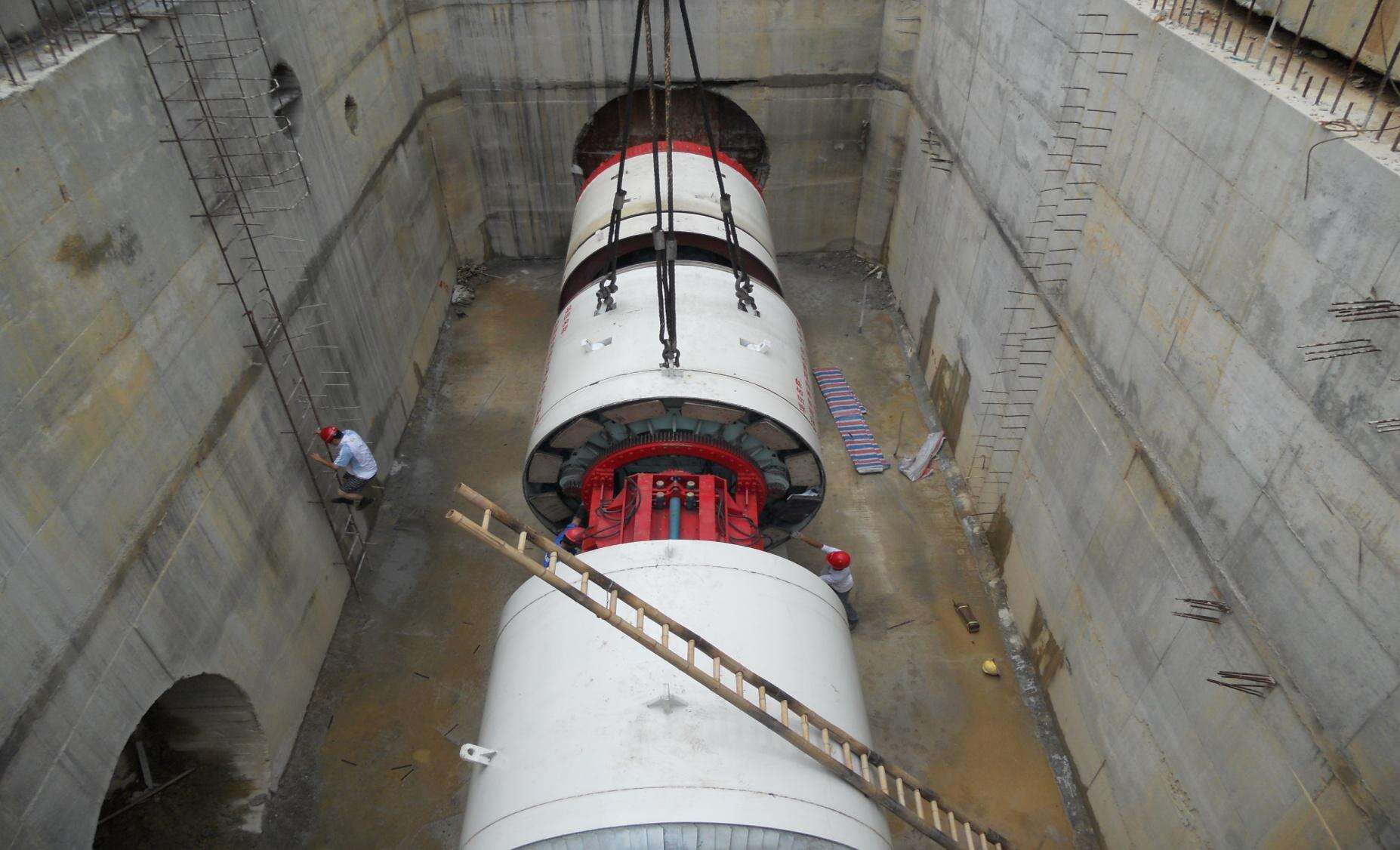
When underground excavation passes through fault zones, the complexity of the ground changes dramatically. A tunnel boring machine operating in these conditions faces fractured rock, unpredictable groundwater inflows, mixed geology, and shifting stress regimes — all of which can stall progress, damage equipment, and inflate project costs. Understanding what makes a tunnel boring machine genuinely efficient in fault zones is not merely an academic question; it is a critical engineering and procurement decision that determines whether a tunneling project succeeds on schedule and within budget.

Fault zones are among the most demanding geological environments a tunnel boring machine can encounter. These zones typically consist of crushed rock, clay-filled fractures, highly variable rock strength, and elevated pore water pressure. Unlike stable homogeneous rock, fault zones do not behave predictably, and a tunnel boring machine that lacks the right design features, operational flexibility, and support systems will struggle to maintain efficiency. This article breaks down the key factors — mechanical, operational, and geotechnical — that determine how well a tunnel boring machine performs when the geology turns hostile.
Understanding Fault Zone Geology and Its Impact on TBM Performance
The Nature of Fault Zone Ground Conditions
A fault zone is a region of the earth's crust where rock masses have been displaced along a fracture plane, leaving behind a corridor of mechanically weakened, highly variable material. Inside this corridor, a tunnel boring machine may encounter gouge material — finely ground rock with clay-like consistency — interspersed with blocks of harder intact rock. This combination creates what engineers call mixed-face conditions, where the cutterhead is simultaneously cutting through materials of vastly different strengths.
The permeability of fault zones is often elevated compared to surrounding rock. Groundwater can flow rapidly through fracture networks, leading to sudden water inrush during tunneling. A tunnel boring machine that does not have adequate water management systems and sealed bulkheads will be highly vulnerable in such environments, potentially facing flooding events that require costly dewatering interventions and unplanned downtime.
Rock mass classification systems such as RQD, Q-system, and RMR typically score fault zones at their lowest range, indicating very poor rock quality. For a tunnel boring machine, this translates into instability at the tunnel face, roof collapses behind the shield, and increased demands on the lining system. Recognizing these conditions before and during excavation is the first step toward managing them effectively.
How Fault Zones Disrupt TBM Advance Rate
The advance rate of a tunnel boring machine is one of the primary metrics of efficiency. In competent rock, a well-matched tunnel boring machine can sustain high penetration rates with minimal intervention. In a fault zone, that rate drops sharply because the machine must frequently slow down, apply different thrust and torque settings, and pause for ground support installation. These interruptions accumulate into significant schedule delays if the machine is not properly equipped.
Cutter wear accelerates in fault zones due to the abrasive nature of crushed rock and quartz-bearing gouge. A tunnel boring machine that does not allow for efficient cutter inspection and replacement — ideally from within a pressurized chamber — will lose far more time to maintenance stops than one designed for rapid tool change. The frequency of cutter changes in a fault zone can be three to five times higher than in clean rock, making this a major driver of overall project efficiency.
Jamming is another threat. When a tunnel boring machine advances into highly fractured or swelling ground, the cutter head and shield can become trapped if thrust and rotation are not managed carefully. Recovery from a stuck tunnel boring machine is one of the most expensive and time-consuming events in underground construction, sometimes requiring pilot tunnels, grouting campaigns, or extensive manual excavation to free the machine.
Key Machine Design Features That Drive Efficiency in Fault Zones
Cutterhead Design and Adaptability
The cutterhead is the primary interface between the tunnel boring machine and the ground, and its design has a profound effect on performance in fault zones. An efficient tunnel boring machine for fault zone conditions typically features a robust, open-face or mixed-type cutterhead with a high opening ratio that allows broken material to pass through freely without clogging. Excessive clogging in soft fault gouge material is a common cause of reduced efficiency and increased torque demand.
Disc cutters mounted on the cutterhead must be positioned with consideration for the variable rock conditions typical of fault zones. A tunnel boring machine with interchangeable gauge and face cutters, combined with a flexible tool arrangement, allows operators to adapt the cutting configuration to the specific characteristics of the fault zone being crossed. This adaptability directly reduces unplanned stops and maintains forward progress even as geology changes.
Cutterhead torque capacity is equally important. In fault zones, the torque demand on a tunnel boring machine can spike suddenly when the machine encounters a block of hard rock embedded in soft gouge. A machine designed with high peak torque reserves and anti-stall torque management systems will handle these spikes without losing rotation, whereas an undersized drive system will stall and potentially lock the cutterhead in place.
Shield and Structural Reinforcement
The shield of a tunnel boring machine serves as the primary structural barrier between the tunnel interior and the surrounding ground. In fault zones, the shield must be engineered to withstand asymmetric loading, convergent ground pressure, and the risk of partial face collapse. A shield that is too short relative to the fault zone width may not provide adequate coverage during the crossing, leaving the machine vulnerable to ground ingress and instability.
Articulated shields, which allow the tunnel boring machine body to flex slightly along its axis, are particularly valuable in fault zones where the rock mass may shift or where the tunnel alignment must navigate around geological anomalies. Rigidity in the wrong conditions can lead to shield jamming, whereas a well-articulated design maintains mobility and reduces the risk of the machine becoming trapped in converging ground.
The tail seal system behind the shield is a critical component that prevents groundwater and soil from entering the tunnel at the interface between the shield and the installed lining segments. In fault zones with high water pressure, the integrity of the tail seal directly determines whether the tunnel boring machine can maintain a safe working environment. Multi-stage tail seals with grease injection systems are a standard feature on machines designed for demanding fault zone conditions.
Ground Probe Drilling and Pre-Treatment Capability
One of the most effective ways a tunnel boring machine maintains efficiency in fault zones is through the integration of probe drilling systems that allow geotechnical investigation ahead of the face. A tunnel boring machine equipped with forward-facing drill rigs can core sample the ground ahead, identify fault zones before they are encountered, and allow engineers to design pre-treatment strategies rather than reacting to problems after they emerge.
Pre-grouting from within the tunnel boring machine is a powerful technique that consolidates fractured rock and reduces groundwater inflow before the cutterhead advances into the treated zone. A machine that is purpose-built with dedicated ports and equipment for this process can execute grouting operations without requiring the crew to exit the machine or set up external infrastructure. This integrated approach keeps the tunnel boring machine at the face rather than retreating to set up ground treatment systems.
Pipe roofing and spiling are additional pre-support techniques that an efficient tunnel boring machine crew can deploy from within the shield. These methods create a structural canopy above the tunnel face, allowing excavation to continue through unstable fault zone material without face collapse. The ability to perform these operations from a single machine platform without interrupting the overall excavation sequence is a clear marker of efficiency in challenging ground.
Operational Strategies for Maintaining TBM Efficiency Through Fault Zones
Real-Time Monitoring and Data-Driven Decision Making
Modern tunnel boring machine systems are instrumented with an extensive array of sensors that monitor thrust, torque, penetration rate, cutterhead RPM, face pressure, and muck flow in real time. In fault zones, the value of this data is amplified because conditions change rapidly and decision windows are narrow. An operator who can see sudden changes in torque demand or face pressure can reduce thrust immediately, preventing a jam or overloading of the cutterhead drive.
Data logging over time allows engineers to build a picture of geological variability along the alignment, correlating machine response data with the known fault zone positions identified in the site investigation. This correlation helps tunneling teams predict when the next difficult zone will be encountered and prepare ground support materials, cutter inventories, and crew schedules in advance. The tunnel boring machine becomes not just an excavation tool but a geological sensing instrument.
Automated guidance systems also contribute to efficiency by maintaining the tunnel boring machine on its designed alignment even when the ground is trying to push the machine off course, which is a common phenomenon in fault zones with asymmetric stress fields. Staying on alignment avoids costly correction maneuvers and ensures that the installed lining ring geometry remains consistent, which is important for structural integrity and downstream fit-out work.
Crew Preparedness and Ground Support Installation Speed
The speed at which a tunnel boring machine crew can install ground support in the tail section of the shield directly affects how quickly the machine can resume boring after each stroke. In fault zones, the demand for support is higher than in competent rock, meaning that the ratio of boring time to support installation time shifts unfavorably unless the crew is highly trained and the support system is well-organized. Precast concrete segments, wire mesh sheets, and steel ribs must be staged and installed with precision and speed.
Crew training specifically focused on fault zone protocols — including emergency response to water inrush, face collapse procedures, and cutter change safety under pressurized conditions — reduces the duration of any unplanned stops that do occur. A tunnel boring machine is only as efficient as the team operating it, and in fault zones, that team's competence under pressure is frequently tested. Regular simulation drills and clearly documented response protocols are part of the broader efficiency equation.
Shift coordination is another operational factor. Fault zones require constant attention, and handing over a tunnel boring machine to an incoming shift without a thorough briefing on current ground conditions, recent cutter wear rates, and any anomalies detected during the previous shift can result in poor decision-making in the early part of the new shift. Structured handover procedures specifically covering fault zone status are a practical efficiency tool that is often underestimated.
Geological Investigation and Pre-Project Planning for Fault Zone Crossings
Site Investigation Quality and Its Influence on TBM Selection
The efficiency of a tunnel boring machine in fault zones is heavily influenced by decisions made long before the machine is ever launched. Site investigation quality determines how well the project team understands the fault zone geometry, gouge material properties, groundwater conditions, and the likely transition lengths between competent rock and fractured zones. Poor site investigation leads to a tunnel boring machine that is selected or configured for conditions that differ significantly from what is actually encountered.
A comprehensive borehole program along the tunnel alignment, combined with geophysical surveys such as seismic refraction and electrical resistivity tomography, provides a three-dimensional understanding of fault zone locations and extents. This data allows the designer to select a tunnel boring machine with the right cutter size, shield length, torque capacity, and ground treatment capabilities to match the specific fault zones on that project. A machine well-matched to its geological challenge will always outperform a generic machine facing unexpected conditions.
Hydrogeological modeling is equally important. Understanding the pore pressure distribution around the fault zones and the likely volume of groundwater inflow allows designers to specify the appropriate seal standards for the tunnel boring machine, the capacity of the dewatering system, and whether pre-grouting will be required. Getting this analysis right upfront converts potential crisis management into planned operational steps, which is the foundation of genuine tunneling efficiency.
TBM Design Customization Versus Off-the-Shelf Solutions
For projects with significant fault zone crossings, the question of whether to use a customized tunnel boring machine or adapt a more standard configuration is a genuine strategic decision. Custom-designed machines can incorporate specific features requested by the project team — such as larger grout pipe arrays, extended probe drill coverage, enhanced tail seal systems, or specially hardened cutterhead wear protection — that a standard tunnel boring machine might not include as standard features.
However, customization takes time and introduces manufacturing risk. A tunnel boring machine that is over-specified for the fault zone conditions may also be unnecessarily complex and difficult to operate and maintain. The most efficient approach is a careful middle ground: selecting a proven platform with the core capabilities required for fault zone work and then adding targeted customizations based on the specific geological data from the site investigation.
Collaboration between the tunnel boring machine manufacturer, the geotechnical consultant, and the contractor during the specification phase is what produces the best outcome. When these parties share data openly and challenge each other's assumptions, the resulting machine specification will be both efficient and realistic, avoiding both under-specification that leads to on-site problems and over-specification that drives up cost without proportional benefit.
FAQ
What is the biggest risk a tunnel boring machine faces in a fault zone?
The biggest risk is shield or cutterhead jamming caused by converging ground pressure or the collapse of fractured rock material around the machine body. When a tunnel boring machine becomes stuck, recovery operations can take weeks and cost millions of dollars. Proper pre-investigation, correct shield length selection, and real-time monitoring of face pressure and thrust force are the primary ways to prevent this outcome and keep the tunnel boring machine moving.
How does a tunnel boring machine handle sudden water inrush in a fault zone?
A well-designed tunnel boring machine manages water inrush through a combination of sealed bulkheads, compressed air face support in EPB or slurry mode, probe drilling ahead of the face to detect water-bearing fractures, and pre-grouting to seal fracture networks before advancing. The machine's dewatering capacity must be sized for the maximum anticipated inflow, and the crew must have emergency protocols in place so that a water inrush event is managed quickly and does not lead to flooding of the tunnel.
Can a single tunnel boring machine be efficient across both fault zones and competent rock on the same project?
Yes, but it requires careful design. A tunnel boring machine that performs well in both environments typically features adjustable operating parameters — variable cutterhead speed and torque, selectable face pressure modes, and flexible ground support options — so that it can be tuned to the conditions it is currently facing. The trade-off is that a machine optimized for one extreme condition will never be quite as efficient at the other end of the spectrum, but a well-balanced design with operational flexibility can perform acceptably across both conditions on mixed-geology projects.
How does pre-grouting from within a tunnel boring machine improve efficiency in fault zones?
Pre-grouting consolidates the loose, fractured material ahead of the face and reduces groundwater inflow before the cutterhead enters the treated zone. This means the tunnel boring machine advances through ground that behaves more predictably, with lower torque demands, reduced cutter wear, and less risk of face instability. The efficiency gain comes not from the grouting itself — which takes time — but from the avoidance of emergency stops, collapse events, and dewatering interventions that would cost far more time if the fault zone were entered without treatment.
Table of Contents
- Understanding Fault Zone Geology and Its Impact on TBM Performance
- Key Machine Design Features That Drive Efficiency in Fault Zones
- Operational Strategies for Maintaining TBM Efficiency Through Fault Zones
- Geological Investigation and Pre-Project Planning for Fault Zone Crossings
-
FAQ
- What is the biggest risk a tunnel boring machine faces in a fault zone?
- How does a tunnel boring machine handle sudden water inrush in a fault zone?
- Can a single tunnel boring machine be efficient across both fault zones and competent rock on the same project?
- How does pre-grouting from within a tunnel boring machine improve efficiency in fault zones?