
 EN
EN
 AR
AR BG
BG HR
HR CS
CS FR
FR DE
DE EL
EL HI
HI IT
IT JA
JA KO
KO RO
RO RU
RU ES
ES TL
TL ID
ID LT
LT SK
SK SL
SL UK
UK VI
VI ET
ET TH
TH TR
TR FA
FA AF
AF MS
MS HY
HY AZ
AZ KA
KA BN
BN LO
LO LA
LA MN
MN NE
NE MY
MY KK
KK UZ
UZ KY
KY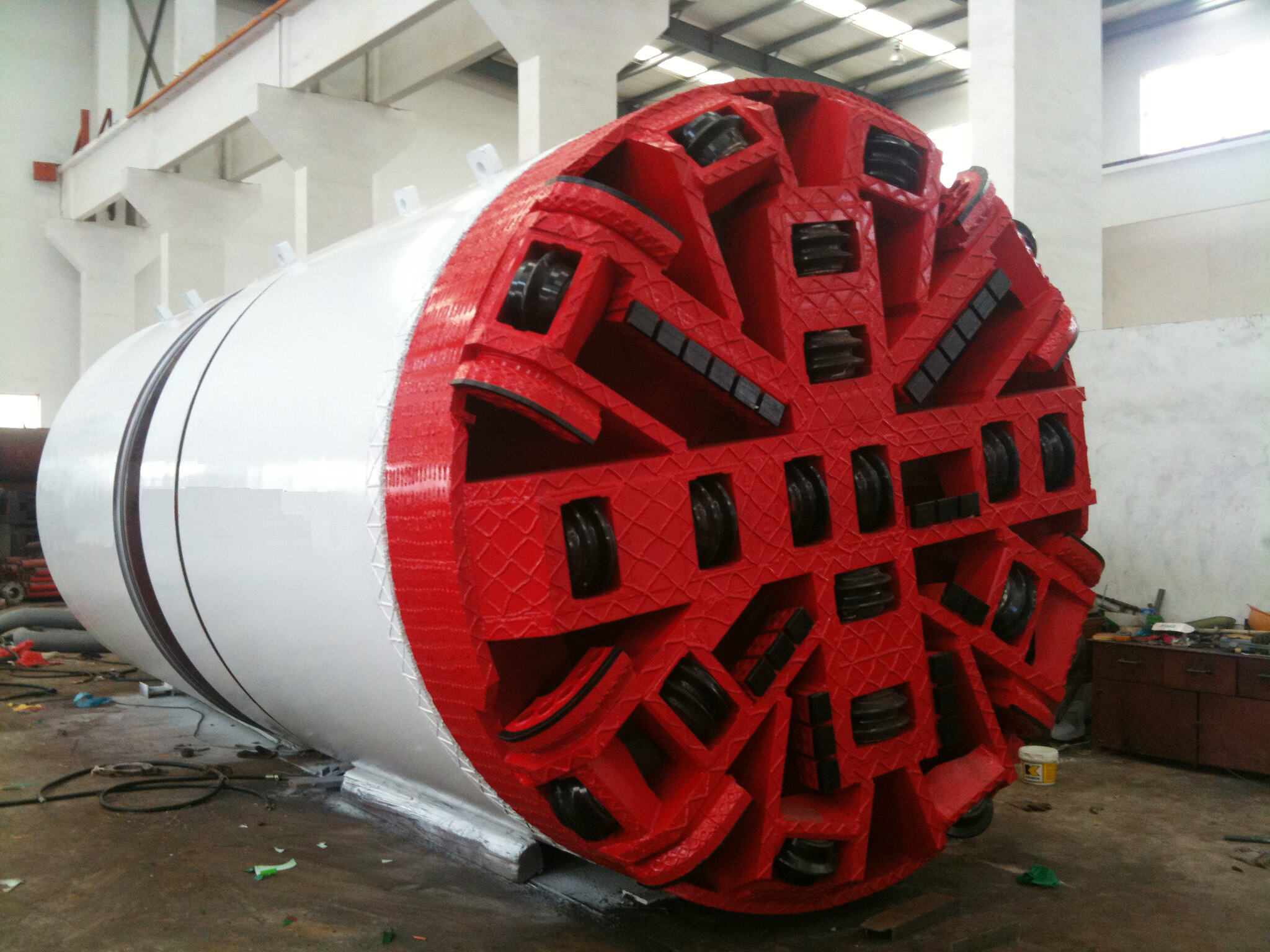
When engineers and project managers evaluate tunneling methods for hard rock environments, speed is almost always at the center of the debate. The question is not simply which technique is more modern, but which one delivers measurable gains in advance rate, cost efficiency, and overall project schedule. The TBM machine has, over decades of infrastructure development, proven itself as a fundamentally different approach to breaking and removing rock — one engineered around continuity, mechanized force, and precision geometry rather than the cyclic disruption that defines conventional drill and blast operations.

Understanding what gives a TBM machine its speed advantage in hard rock requires looking at each phase of the tunneling cycle — how rock is broken, how spoil is removed, how support is installed, and how each of these activities interrelates under continuous mechanical operation. Drill and blast performs these steps in sequence, with mandatory downtime between them. A TBM machine, by contrast, integrates most of these functions into a single, forward-moving system that rarely stops. This architectural difference in workflow is the foundation of every performance comparison between the two methods in competent hard rock conditions.
The Continuous Cutting Cycle Versus Stop-Start Blasting
How a TBM Machine Eliminates Dead Time
In a conventional drill and blast tunnel, the working cycle is inherently fragmented. Workers drill a pattern of blast holes, load them with explosive charges, fire the blast, then wait for fumes to clear, re-enter to inspect, scale loose rock, and finally muck out the broken material. Only after all of that does any ground support get installed before the cycle repeats. Each complete cycle typically advances the heading by one to four meters, and the nonproductive waiting phases can consume as much time as the productive ones.
A TBM machine eliminates most of this dead time by mechanical design. The rotating cutterhead presses disc cutters against the rock face with controlled thrust force, creating tensile fractures that chip and flake the rock in a continuous process. As the cutterhead rotates, excavated material falls immediately onto a conveyor integrated into the machine body and is transported rearward to the surface or a disposal point. The TBM machine does not need to stop for ventilation after each advance cycle because there is no explosive detonation generating toxic gases.
This continuity of operation directly translates to higher average advance rates. While a drill and blast crew might achieve ten to fifteen meters per day in hard rock under favorable conditions, a well-matched TBM machine operating in the same formation can achieve advance rates of twenty to fifty meters per day or more, depending on rock strength, abrasivity, and equipment configuration. The elimination of cyclic downtime is the single most impactful driver of this difference.
Rotational Force and Rock Fragmentation Efficiency
The disc cutters mounted on the cutterhead of a TBM machine are engineered to exploit the natural brittleness of hard rock under concentrated load. As each disc cutter rolls across the rock surface under high thrust force — commonly ranging from 150 to 300 kilonewtons per cutter — it initiates micro-fractures that propagate laterally between adjacent cutter tracks. The rock chips away in wedge-shaped fragments called chips or slivers. This crack propagation mechanism is energetically efficient because it uses the rock's own tensile weakness rather than fighting it.
Explosives in a drill and blast operation must overcome both compressive and tensile resistance simultaneously, and much of the energy disperses into ground vibration, airblast, and heat rather than productive rock breakage. A TBM machine concentrates mechanical energy precisely at the cutter-rock interface, meaning that a far higher proportion of input energy results in useful excavation. In very hard, massive rock with unconfined compressive strength above 150 MPa, the TBM machine's disc cutting mechanism actually performs better relative to blasting because the rock's brittleness and consistent microstructure support efficient crack propagation across the full face.
Integrated Muck Handling and Support Installation
Rear-System Design and Uninterrupted Material Flow
The speed advantage of a TBM machine does not come from the cutterhead alone. An equally important contributor is the integration of muck handling within the machine's own body. As soon as rock is broken at the face, scrapers and buckets on the cutterhead gather the cuttings and deposit them onto an internal conveyor belt. This belt moves material toward the rear of the machine continuously, where it connects to a trailing conveyor system or rail-based muck cars that carry material to the surface.
In a drill and blast tunnel, mucking requires separate loader vehicles and haulage equipment that must access the face directly. The heading must be cleared of personnel and equipment before blasting, and then the haulage equipment must re-enter after the environment is confirmed safe. This sequential logic means that mucking cannot begin until blasting ends, and drilling cannot resume until mucking is complete. A TBM machine collapses these phases into simultaneous processes — excavation and muck transport happen at the same time, in the same continuous motion.
This integrated approach also reduces labor intensity significantly. A TBM machine crew manages a mechanized system rather than operating multiple independent pieces of equipment in coordination. Fewer personnel are needed per meter of advance, and the physical working environment is more controlled, which reduces time lost to safety incidents or human coordination delays.
Ground Support Without Stopping Excavation
In hard rock tunneling with a shielded TBM machine, ground support installation occurs in the protected zone immediately behind the cutterhead shield, while excavation continues at the face. Precast concrete segment rings are erected by an automated erector arm in the trailing section of the machine while the cutterhead advances. This parallel activity is one of the most powerful structural advantages of a TBM machine over drill and blast in terms of schedule compression.
Drill and blast tunnels in hard rock may require systematic rock bolt installation, wire mesh placement, and shotcrete application after each blast round. These tasks are performed by workers with hand-operated or mechanized equipment, but they cannot be done while blasting is occurring or while fumes remain in the heading. The TBM machine effectively removes this constraint by separating the support installation zone from the active cutting zone through the physical length of the machine itself.
The result is that a TBM machine can maintain near-continuous forward progress even in rock conditions that would require dense support installation. The support work does not subtract from the excavation time; it runs in parallel, ensuring that the machine's cycle time reflects excavation speed rather than a combined excavation-plus-support schedule.
Rock Condition Suitability and Performance Predictability
Why Hard Rock Favors TBM Machine Performance
There is a common assumption that harder rock is more challenging for a TBM machine, but the relationship is more nuanced. Competent hard rock — meaning rock that is strong, continuous, and free of major fault zones — actually provides ideal conditions for a TBM machine to achieve its highest advance rates. The consistency of the rock mass allows the cutters to operate at near-optimal parameters without the sudden load variations caused by voids, clay intrusions, or unpredictable joint sets.
Drill and blast, while adaptable to variable ground, does not gain a proportional speed advantage in harder rock. Harder rock requires longer drilling times, higher explosive charges, and often more careful scaling after blasting, all of which extend the cycle time. The TBM machine's performance scales more favorably with rock strength because harder, more brittle rock tends to chip more efficiently under disc cutter loading. Projects in granite, basalt, quartzite, and similar formations have consistently demonstrated advance rates from TBM machines that outperform drill and blast timelines by significant margins.
Consistency of Advance Rate Over Long Drives
One of the most strategically important advantages of a TBM machine in hard rock is the predictability of its advance rate. Project planners and contract schedulers can forecast machine performance with meaningful accuracy based on rock characterization data from site investigation. This predictability is valuable for contract management, resource planning, logistics coordination, and financing.
Drill and blast timelines in hard rock are inherently more variable. A single encounter with an unexpected fault zone, a harder lens of abrasive rock, or unstable overbreak conditions can significantly extend the project schedule. The TBM machine is not immune to geological surprises, but its mechanized nature allows for more systematic and controlled responses, and its data acquisition systems can provide real-time information about changing ground conditions ahead of the face.
Over long tunnel drives — particularly those exceeding three to five kilometers — the cumulative speed advantage of a TBM machine becomes decisive. The time lost to mobilization and the relatively higher capital cost of the machine are amortized over the total advance length, and the consistent daily progress more than compensates for the initial investment difference compared to drill and blast methods.
Workforce, Safety, and Schedule Integration
Reduced Human Exposure to Hazardous Conditions
The speed advantage of a TBM machine is not purely mechanical — it also comes from removing human workers from the most dangerous parts of the tunneling process. In a drill and blast tunnel, workers must physically access the blast face repeatedly throughout every cycle: to drill, to charge, to scale, and to install support. Each face visit carries risk, and safety incidents, however minor, impose time losses that compound over a long project.
A TBM machine keeps most of the workforce in controlled environments within the machine body or in the well-established area behind the trailing gear. The automated cutterhead and conveyor systems handle the most dangerous proximity to fresh rock. This design philosophy reduces incident frequency, which directly protects schedule integrity. Projects that avoid safety-related work stoppages maintain their advance rate projections more reliably than those with recurring face incidents.
Parallel Workflow and Crew Utilization
A TBM machine project enables parallel workflows that drill and blast cannot accommodate. While the machine advances, crews at the surface or in the trailing section can perform maintenance, supply replenishment, segment delivery, and logistics without stopping excavation. The machine's crew is organized into specialized roles — operators, maintenance technicians, segment erector operators, conveyor attendants — each working simultaneously rather than waiting for the previous step in a sequential cycle.
This parallelism is a force multiplier for schedule performance. In large infrastructure projects such as metro tunnels, water conveyance systems, or road tunnels through mountain ranges, the ability to sustain multiple work streams concurrently means that the TBM machine project can meet compressed timelines that would be physically impossible with drill and blast methods.
FAQ
In what type of hard rock does a TBM machine achieve the highest advance rates?
A TBM machine performs best in competent, massive hard rock such as granite, gneiss, basalt, or quartzite where the rock is strong, consistent, and relatively free of major discontinuities or clay-filled faults. These conditions allow disc cutters to operate at optimized thrust and rotational parameters, producing efficient chip formation and stable face conditions. The more uniform the rock mass, the more reliably the TBM machine can sustain peak daily advance rates.
Does a TBM machine always outperform drill and blast in hard rock?
Not in every scenario. For short tunnels, complex alignments with frequent changes in direction, or projects in highly variable rock conditions with numerous fault zones, the flexibility of drill and blast may offer compensating advantages. However, for long straight or gently curved drives through competent hard rock, the TBM machine is almost always faster once the machine is fully operational and the logistics chain is established. The break-even tunnel length where a TBM machine becomes economically and schedule-advantageous is typically considered to be around one to three kilometers, depending on project specifics.
How does cutter maintenance affect TBM machine speed in hard rock?
Disc cutter wear is one of the primary maintenance challenges for a TBM machine in abrasive hard rock. Worn or damaged cutters must be replaced to maintain cutting efficiency, and this requires scheduled machine stops for cutter inspection and change-out. In highly abrasive formations such as quartzite, cutter consumption rates can be high and maintenance intervals frequent. However, modern TBM machine designs accommodate rapid cutter replacement procedures, and planned maintenance stops are far shorter and more predictable than the unplanned delays that accumulate in drill and blast operations over the same distance.
What project data should be prepared before selecting a TBM machine for hard rock tunneling?
Site investigation should include detailed rock mass characterization covering uniaxial compressive strength, Brazilian tensile strength, rock abrasivity index, joint spacing and orientation, groundwater conditions, and the presence of any major fault or shear zones. This data feeds directly into TBM machine specification, including cutterhead thrust capacity, cutter type and spacing, shield design, and backup system configuration. Accurate geotechnical data is the single most important input for predicting whether a TBM machine will deliver its expected speed advantage on a given project.
Table of Contents
- The Continuous Cutting Cycle Versus Stop-Start Blasting
- Integrated Muck Handling and Support Installation
- Rock Condition Suitability and Performance Predictability
- Workforce, Safety, and Schedule Integration
-
FAQ
- In what type of hard rock does a TBM machine achieve the highest advance rates?
- Does a TBM machine always outperform drill and blast in hard rock?
- How does cutter maintenance affect TBM machine speed in hard rock?
- What project data should be prepared before selecting a TBM machine for hard rock tunneling?