
 EN
 AR
 BG
 HR
 CS
 FR
 DE
 EL
 HI
 IT
 JA
 KO
 RO
 RU
 ES
 TL
 ID
 LT
 SK
 SL
 UK
 VI
 ET
 TH
 TR
 FA
 AF
 MS
 HY
 AZ
 KA
 BN
 LO
 LA
 MN
 NE
 MY
 KK
 UZ
 KY

Tunnel construction has long relied on controlled blasting to break through rock formations, but this method carries inherent risks and environmental concerns. A rock pipe jacking machine fundamentally changes how contractors approach difficult geology by using mechanical force to advance precast concrete segments through rock with minimal excavation disturbance. Understanding why a rock pipe jacking machine reduces the need for blasting helps engineers select the right technology for their specific project conditions and risk tolerance.
The shift from blasting-dependent methods to mechanical rock cutting represents a critical evolution in subsurface infrastructure. When contractors deploy a rock pipe jacking machine, they gain precision, repeatability, and control that traditional explosive methods cannot match. This shift is not merely about choosing an alternative tool; it reflects a fundamental change in how tunneling projects manage geological uncertainty, workforce safety, and community impact.
How a Rock Pipe Jacking Machine Cuts Through Rock Efficiently
Mechanical Cutting and Progressive Advancement
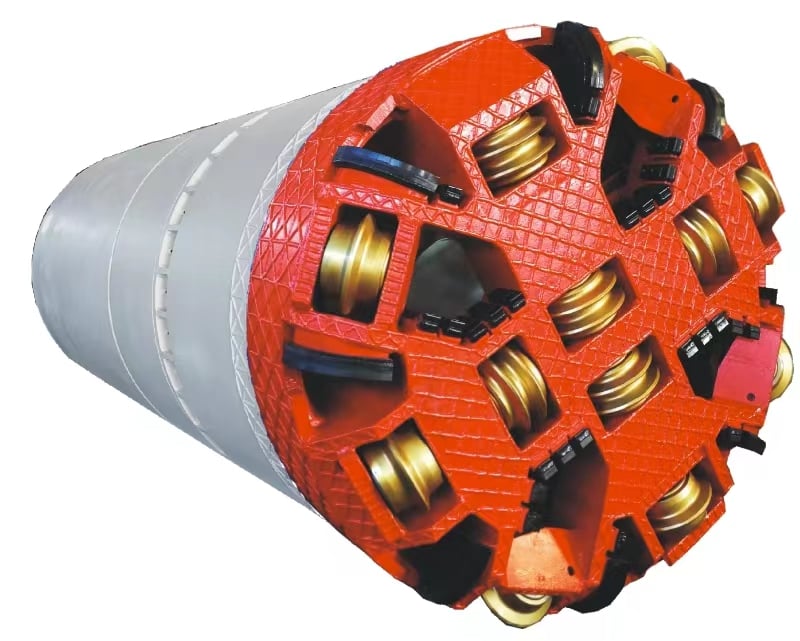
A rock pipe jacking machine operates by deploying a cutter head equipped with tungsten carbide cutting tools that continuously fracture and shear rock as the machine advances. The cutter head rotates while hydraulic jacks push the shield forward in controlled increments, allowing precast concrete pipe segments to be installed behind the shield in a continuous process. This mechanical action breaks rock into manageable fragments that are extracted by conveyor or slurry systems without requiring explosive force, making the rock pipe jacking machine particularly effective in mixed-face geology where rock strength varies unpredictably.
Slurry Balance and Pressure Control
Modern rock pipe jacking machine systems maintain slurry balance at the cutter head to equalize groundwater pressure and prevent sudden collapses or face instability. The slurry not only stabilizes the excavation face but also lubricates the cutter tools and transports spoil to the surface through pipelines. By regulating chamber pressure and slurry consistency, operators can adjust the rock pipe jacking machine response to changing rock conditions in real time, avoiding the rigid, all-or-nothing nature of blast cycles that cannot be easily modified mid-cycle.
Why Blasting Becomes Unnecessary With Precision Rock Excavation
Elimination of Blast-Induced Vibration and Ground Disturbance
Blasting generates intense vibration, flyrock, and uncontrolled fracturing that can damage nearby utilities, structures, and the tunnel face itself. A rock pipe jacking machine eliminates these risks by replacing sudden explosive energy with steady mechanical cutting that confines rock damage to the immediate cutter head area. Infrastructure above tunnels—whether rail networks, water mains, or buildings—remains undisturbed because the rock pipe jacking machine produces no shock waves or seismic disturbance. This controlled excavation means contractors can work in congested urban areas, near sensitive facilities, or under strict vibration limits without the regulatory burden and insurance complexity that blasting demands.
Improved Face Stability and Reduced Overbreak
Blasting creates irregular breakage patterns that often extend beyond the intended profile, leading to overbreak and instability that compromise liner integrity. The rock pipe jacking machine maintains consistent cutter head engagement, creating a smooth, predictable rock surface that matches the pipe outer diameter precisely. This reduces the need for emergency grouting, secondary support, or enlarged excavation areas. When a rock pipe jacking machine is properly configured for the rock mass, overbreak becomes minimal, meaning fewer repair delays and fewer surprises that could force emergency blasting later in the project.
Economic and Operational Advantages of Mechanical Rock Removal
Reduced Project Duration and Equipment Mobilization
Blasting requires advance planning, specialized personnel, regulatory permits, third-party blast monitoring, restricted work zones, and mandatory delays between blast cycles. A rock pipe jacking machine operates continuously once launched, with each cutter head rotation advancing the tunnel incrementally without regulatory hold-ups or safety standdowns. Pipe segments can be installed immediately behind the shield without waiting for rock debris clearance or post-blast stability assessment. Many projects using a rock pipe jacking machine complete their tunnel drives 20 to 30 percent faster than equivalent blasting-based methods because work proceeds around the clock without interruption.
Lower Total Cost and Simplified Logistics
The cost structure favors mechanical excavation over blasting when considering demolition of blast damage, extended schedules, third-party claims, and contingency reserves. A rock pipe jacking machine consolidates multiple operations—rock cutting, debris removal, and pipe installation—into one continuous process, reducing labor and equipment mobilization cost. Contractors need not contract separate blasting services, coordinate with licensed powder magazines, or maintain specialized explosive storage and handling protocols. The simplified logistics of a rock pipe jacking machine mean lower insurance premiums, fewer regulatory inspections, and easier coordination with surface construction teams.
FAQ
Can a rock pipe jacking machine handle extremely hard rock formations?
Yes, modern rock pipe jacking machine systems can penetrate formations with uniaxial compressive strength exceeding 200 MPa, depending on cutter head design, thrust capacity, and torque rating. Hard rock projects may require special tool materials, higher rotation speeds, or segmented cutter technology, but the rock pipe jacking machine remains capable. In cases where rock strength approaches or exceeds system limits, contractors may use probe drilling or other steering techniques to route the rock pipe jacking machine through softer strata or pre-treat the rock with targeted, low-intensity methods rather than returning to full-scale blasting.
Does using a rock pipe jacking machine require different ground conditioning than blasting?
A rock pipe jacking machine uses chemical conditioning agents and slurry additives to maintain cutter head performance and reduce tool wear, but the philosophy differs from blast preparation. While blasting often aims to fracture and loosen rock in advance, a rock pipe jacking machine works best with consistent, stable ground conditions. Ground freezing, grouting, or controlled dewatering may still be applied to reduce instability, but these methods enhance predictability rather than replace mechanical cutting, making the rock pipe jacking machine adaptable to site-specific conditions without explosive risk.
What rock types are best suited for rock pipe jacking machines?
Mixed-face geology with moderate to high rock strength is ideal for a rock pipe jacking machine because the machine maintains steady pressure and cutter engagement regardless of strength variation. Sandstone, limestone, granite, and similar medium-hardness rocks allow the rock pipe jacking machine to operate at predictable rates without excessive tool wear or power demand. Heavily fractured or clay-rich formations may require soil conditioning, but the rock pipe jacking machine excels compared to blasting in these conditions because mechanical cutting respects natural weakness planes while explosives do not, reducing unexpected instability and damage.