
 EN
 AR
 BG
 HR
 CS
 FR
 DE
 EL
 HI
 IT
 JA
 KO
 RO
 RU
 ES
 TL
 ID
 LT
 SK
 SL
 UK
 VI
 ET
 TH
 TR
 FA
 AF
 MS
 HY
 AZ
 KA
 BN
 LO
 LA
 MN
 NE
 MY
 KK
 UZ
 KY
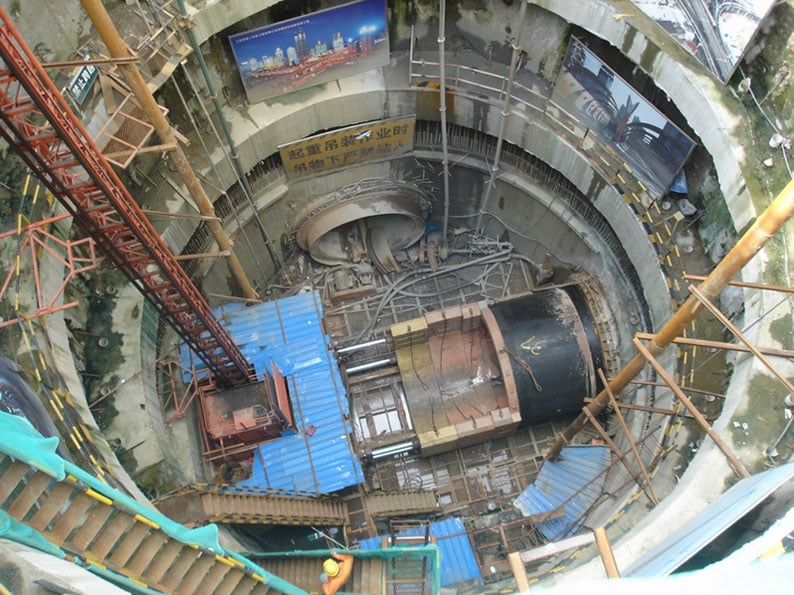
Pipe jacking operations represent one of the most demanding applications in modern trenchless construction, requiring precision equipment and meticulous planning to ensure project success. The mud treatment capacity directly influences whether a pipe jacking project stays on schedule and within budget, making it a critical factor that engineers and contractors must carefully evaluate before mobilization. Mud treatment capacity refers to the volume of slurry that a treatment system can process per hour while maintaining the required conditioning standards for boring operations. Without properly matched mud treatment capacity, projects face costly delays, equipment failures, and compromised ground conditions that threaten both safety and productivity.
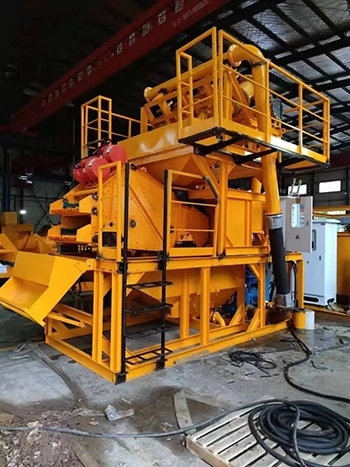
Matching mud treatment capacity to pipe jacking operations involves understanding the relationship between boring machine performance, slurry circulation rates, and the specific soil conditions encountered on site. The mud treatment capacity must exceed the peak slurry flow generated by the pipe jacking machine to prevent buildup, maintain hydrostatic pressure, and keep the cutting face stable throughout excavation. This alignment ensures that recycled slurry returns to the cutting head with optimal rheological properties, allowing continuous advancement without operational interruptions or safety compromises.
Understanding Mud Treatment Capacity Requirements
Defining System Capacity and Flow Demands
Mud treatment capacity is measured in cubic meters per hour and represents the maximum volume of slurry a system can condition, recycle, and return to the pipe jacking machine. Each pipe jacking operation generates slurry at a rate proportional to the boring machine diameter, advance rate, and soil type being excavated. The mud treatment capacity must be sized to handle peak flow conditions without allowing slurry to accumulate in storage tanks or allowing treatment delays that compromise cutting head performance. Engineers calculate required mud treatment capacity by multiplying the boring machine diameter by the planned advance rate and applying a safety factor to account for soil variability and operational fluctuations.
Alignment with Boring Machine Specifications
Pipe jacking machines come in various sizes, from 600 millimeters to over 3 meters in diameter, each generating different slurry flow volumes depending on operational parameters. A small-diameter pipe jacking machine advancing at 20 meters per day through clay generates significantly less slurry volume than a large-diameter machine advancing at 40 meters per day through sandy conditions. The mud treatment capacity selected must match the specific pipe jacking machine model, its cutting head type, and the expected advance rate for the project geology. Undersizing mud treatment capacity relative to the pipe jacking machine creates backpressure issues, reduces advance rates, and forces operational compromises that extend project timelines and increase costs.
Sizing Mud Treatment Capacity for Soil and Project Conditions
Soil Type Impact on Treatment Demands
Different soil conditions generate distinct slurry characteristics that directly affect mud treatment capacity requirements. Clay soils produce slurry with high solid content and greater bentonite demand for stability, requiring mud treatment capacity systems with robust solids separation and conditioning equipment. Sandy soils generate slurry with lower cohesion, demanding higher mud treatment capacity flow rates to maintain hydrostatic pressure and prevent cave-ins at the cutting face. Silty or mixed-face conditions often present the greatest mud treatment capacity challenges because soil behavior varies unpredictably, requiring treatment systems with flexibility to adjust conditioning parameters while maintaining consistent slurry properties. Contractors must analyze site geological surveys and boring logs to estimate average and peak mud treatment capacity demands throughout the project.
Advance Rate and Mud Treatment Capacity Correlation
The planned advance rate fundamentally determines the mud treatment capacity needed because faster excavation generates higher slurry volumes per unit time. Projects targeting 50 meters per day require substantially greater mud treatment capacity than projects advancing at 10 meters per day, even with identical boring machine diameters. Aggressive advance schedules increase the mud treatment capacity demand at peak hours, often requiring oversizing the system to maintain slurry quality during maximum production phases. Conversely, conservative advance strategies may allow smaller mud treatment capacity systems to handle flow volumes, but this flexibility often comes at the cost of extended project duration and higher labor expenses. The relationship between advance rate and mud treatment capacity directly impacts project economics because system rental and operating costs must be balanced against timeline compression benefits.
Practical Integration of Mud Treatment Capacity with Pipe Jacking Operations
Storage Tank Dimensioning and Mud Treatment Capacity Balance
Mud treatment capacity must work in concert with storage tank volumes to create a stable slurry management system throughout pipe jacking operations. Tank volume should provide sufficient residence time for slurry conditioning, typically 30 to 45 minutes of active processing before material recirculates to the boring machine. When mud treatment capacity exceeds storage tank volume processing rate, slurry becomes over-processed, wasting energy and degrading bentonite performance at the cutting face. Conversely, when tank volumes are too large relative to mud treatment capacity, settled solids may not receive adequate treatment, and slurry properties drift outside target specifications. Engineers optimize this relationship by calculating tank volume to support the selected mud treatment capacity, ensuring slurry consistency supports continuous pipe jacking advancement without operational adjustments.
Equipment Selection Driven by Mud Treatment Capacity Specifications
The mud treatment capacity requirement directly determines which equipment components are necessary for a particular pipe jacking project. Shale shakers, centrifuges, mud cleaners, and hydrocyclones are all selected based on mud treatment capacity needs and the specific solids separation demands of the project geology. A mud treatment capacity system rated for 800 cubic meters per hour requires substantially different centrifuge sizes, pump capacities, and motor power than a system designed for 300 cubic meters per hour. Undersizing any individual component relative to the overall mud treatment capacity creates bottlenecks where material backs up, treatment lags, and slurry quality deteriorates. Contractors must verify that every element within the mud treatment capacity system, from inlet screens to discharge pumps, operates seamlessly at design flow rates to maintain predictable pipe jacking performance.
Real-Time Monitoring and Mud Treatment Capacity Adjustments
During active pipe jacking operations, monitoring actual slurry generation against planned mud treatment capacity rates allows operators to optimize performance and catch capacity shortfalls early. Many modern projects employ real-time viscosity, density, and solid content monitoring to verify that mud treatment capacity systems maintain slurry specifications throughout the bore. If actual slurry volume exceeds anticipated levels due to unexpected soil conditions, adjusting the advance rate or increasing mud treatment capacity equipment efficiency becomes necessary to prevent cutting face instability. Conversely, if slurry generation falls below predictions, the mud treatment capacity system can be throttled back to reduce energy consumption and operational costs without compromising boring machine performance. This adaptive approach transforms mud treatment capacity from a static design parameter into a dynamic operational tool that responds to field conditions.
FAQ
How is mud treatment capacity calculated for a specific pipe jacking project?
Mud treatment capacity is calculated by multiplying the boring machine cross-sectional area by the planned advance rate in meters per hour, then applying a safety factor ranging from 1.2 to 1.5 depending on soil variability and operational contingencies. For example, a 2.5-meter diameter machine advancing at 15 meters per day in clay soil would generate approximately 50 to 70 cubic meters of slurry per hour, requiring mud treatment capacity equipment rated for 60 to 100 cubic meters per hour to maintain safe operational margins. Site-specific geological conditions, advance rate targets, and contractor experience all influence the final mud treatment capacity selection to ensure the system handles peak demand periods without operational stress.
What happens if mud treatment capacity is undersized for pipe jacking operations?
Undersized mud treatment capacity leads to slurry accumulation in storage tanks, elevated viscosity at the cutting face, reduced advance rates, and potential instability of the bore tunnel. When treatment equipment cannot process slurry volume fast enough, bentonite conditioning lags, solid content rises, and the boring machine struggles to maintain hydrostatic pressure balance. Project delays, equipment strain, and increased grouting demands typically result from undersized mud treatment capacity, making accurate capacity calculations essential before project mobilization. In extreme cases, insufficient mud treatment capacity can force operational halts until temporary treatment upgrades are installed, causing schedule delays measured in weeks.
Can mud treatment capacity be modified during an active pipe jacking operation?
Yes, mud treatment capacity can be adjusted during active operations by modifying advance rates, adding temporary treatment equipment, or optimizing existing system efficiency to match changing ground conditions. If boring enters unexpected high-permeability zones requiring greater slurry circulation, contractors can hire additional treatment capacity units to augment the original system without halting the bore. Conversely, encountering stable clay zones may allow reducing advance rates, which proportionally reduces slurry generation and frees up mud treatment capacity for efficiency gains. Most modern pipe jacking projects maintain contingency budgets for mud treatment capacity modifications because field conditions rarely match pre-construction geological predictions perfectly.