
 EN
 AR
 BG
 HR
 CS
 FR
 DE
 EL
 HI
 IT
 JA
 KO
 RO
 RU
 ES
 TL
 ID
 LT
 SK
 SL
 UK
 VI
 ET
 TH
 TR
 FA
 AF
 MS
 HY
 AZ
 KA
 BN
 LO
 LA
 MN
 NE
 MY
 KK
 UZ
 KY

Understanding pipe jacking machine specifications is critical for any underground construction project seeking reliable, efficient tunneling performance. The pipe jacking machine specifications you select directly influence project timeline, cost efficiency, and the structural integrity of your installation. Whether you are working on water mains, sewage systems, or utility conduits, knowing the relationship between torque, thrust, and steering force ensures you deploy the right equipment for your soil conditions and project scope.
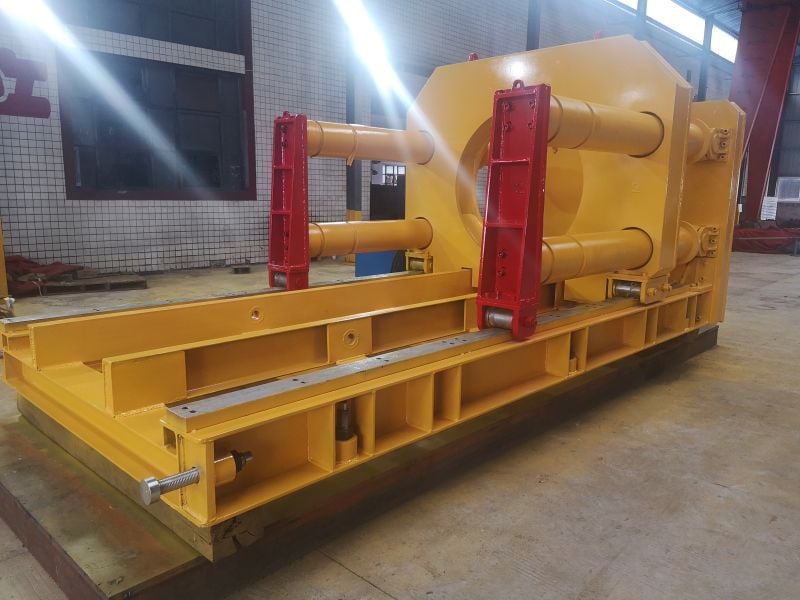
Pipe jacking machine specifications encompass multiple mechanical and operational parameters that work together to push pipe sections through soil. Engineers must evaluate torque capacity to overcome soil resistance, thrust force to propel the pipes forward, and steering force precision to maintain alignment. Each specification relates directly to ground conditions, pipe diameter, and installation depth, making detailed knowledge of these metrics essential for successful project execution in modern trenchless construction.
Torque and Rotational Capacity in Pipe Jacking
Understanding Torque Requirements
Torque represents the rotational force that the pipe jacking machine specifications must deliver to cut through soil and rock formations. The pipe jacking machine specifications for torque vary significantly based on soil type, with cohesive clay requiring different torque levels than granular sand or mixed-face conditions. Hard rock, chalk, and compacted soil layers demand higher torque values, while softer clay and silt require lower rotational force. Selecting pipe jacking machine specifications with insufficient torque leads to cutter head stalling, project delays, and potential equipment damage.
Torque Distribution and Cutter Head Design
Modern pipe jacking machine specifications integrate advanced cutter head designs to optimize torque distribution across cutting tools. The torque rating in pipe jacking machine specifications must align with the cutter blade configuration, number of cutting edges, and material composition. Pipe jacking machine specifications that include variable torque capacity allow operators to adapt to changing ground conditions during excavation. Enhanced torque capacity reduces penetration time and improves project economics, particularly in challenging geological environments where ground conditions shift unexpectedly during boring.
Thrust Force and Propulsion Mechanics
Calculating Thrust Requirements
Thrust force represents the hydraulic pushing power that advances pipe segments through the ground, making it one of the most critical pipe jacking machine specifications. The required thrust depends on pipe diameter, installation depth, bore length, soil friction, and overburden pressure acting on the pipe jacking machine specifications. Larger diameter pipes and deeper installations demand proportionally greater thrust force, while frictional resistance from surrounding soil increases thrust requirements exponentially. Pipe jacking machine specifications must provide sufficient thrust margin to overcome these resistances and maintain steady advance rates without exceeding safe operational limits.
Jacking Frame and Reaction Systems
Pipe jacking machine specifications include reaction frame design that anchors the jacking apparatus and transmits thrust force efficiently. The reaction frame must accommodate the total thrust generated by the pipe jacking machine specifications without structural failure or deflection. In deep installations, pipe jacking machine specifications include load-bearing calculations that account for cumulative pipe weight, groundwater pressure, and lateral soil forces. Proper reaction system design ensures that the thrust force defined in pipe jacking machine specifications translates directly into productive advancement rather than wasted energy or structural compromise.
Steering Force and Directional Control
Precision Steering Mechanisms
Steering force enables the pipe jacking machine specifications to maintain accurate horizontal and vertical alignment throughout the bore, critical for utility connections and infrastructure integration. The pipe jacking machine specifications for steering capacity must provide sufficient corrective force to counteract soil anisotropy, which can cause unplanned deviation from the design alignment. Advanced pipe jacking machine specifications incorporate laser guidance systems and real-time monitoring that allow operators to apply steering force precisely when needed. Inadequate steering force in pipe jacking machine specifications results in bore deviation, forcing costly remediation or installation failure.
Tilt and Vertical Control
Pipe jacking machine specifications must address both horizontal steering and vertical tilt control to maintain grade and elevation requirements. The steering force capacity in pipe jacking machine specifications determines how quickly and accurately the bore can be corrected if vertical deviation occurs. Gradient changes, soft pockets within soil strata, and variable water table conditions all influence how steering force interacts with ground resistance. Comprehensive pipe jacking machine specifications include dynamic steering parameters that adapt to real-time feedback, enabling smooth bore advancement even when ground conditions prove challenging.
Integration of Specifications into Project Planning
Site-Specific Specification Selection
Selecting appropriate pipe jacking machine specifications begins with detailed geotechnical investigation that defines soil profiles, water conditions, and existing utilities along the bore path. The pipe jacking machine specifications you choose must match your specific ground conditions, as over-specification increases equipment cost and project expenses, while under-specification guarantees failure. Project duration, permit restrictions, and space limitations further influence which pipe jacking machine specifications deliver optimal value. Engineering teams use geotechnical reports to map torque, thrust, and steering requirements across the entire bore length, then specify equipment that maintains safety margins throughout.
Performance Monitoring and Adaptation
Modern projects implement continuous monitoring of actual torque, thrust, and steering force performance during boring, comparing real-time data against pipe jacking machine specifications. When boring conditions differ from predictions, operators reference pipe jacking machine specifications to adjust advance rate, cutter rotation speed, or steering intervention frequency. This data-driven approach prevents equipment overload, extends machine life, and maintains schedule adherence even when ground conditions shift. Pipe jacking machine specifications combined with experienced crew management create reliable execution in complex urban environments where ground variability challenges predictability.
FAQ
What factors most influence pipe jacking machine specifications selection?
Geotechnical conditions, pipe diameter, bore length, installation depth, and existing utility locations are the primary factors that determine appropriate pipe jacking machine specifications. Your site investigation should clearly define soil strength, water table elevation, and abrasivity to guide pipe jacking machine specifications choices. Project timeline and equipment availability also shape which pipe jacking machine specifications become practical for your specific installation.
How do soil conditions affect pipe jacking machine specifications requirements?
Cohesive soils require different pipe jacking machine specifications than granular soils, with clay and silt generally demanding lower torque than sand and gravel. Rock formations and highly compacted layers necessitate robust pipe jacking machine specifications with high torque and thrust capacity. Mixed-face conditions require pipe jacking machine specifications flexible enough to handle transitions between soil types during a single bore.
Can pipe jacking machine specifications be adjusted after equipment mobilization?
Many modern pipe jacking machines allow parameter adjustment for torque, thrust rate, and steering sensitivity within design limits, though fundamental specifications like maximum thrust and torque cannot be changed. Experienced operators optimize pipe jacking machine specifications within safe ranges to adapt to actual ground conditions discovered during boring. Major specification changes require equipment replacement, making accurate pre-project specification selection essential for schedule and budget compliance.