
 EN
EN
 AR
AR BG
BG HR
HR CS
CS FR
FR DE
DE EL
EL HI
HI IT
IT JA
JA KO
KO RO
RO RU
RU ES
ES TL
TL ID
ID LT
LT SK
SK SL
SL UK
UK VI
VI ET
ET TH
TH TR
TR FA
FA AF
AF MS
MS HY
HY AZ
AZ KA
KA BN
BN LO
LO LA
LA MN
MN NE
NE MY
MY KK
KK UZ
UZ KY
KY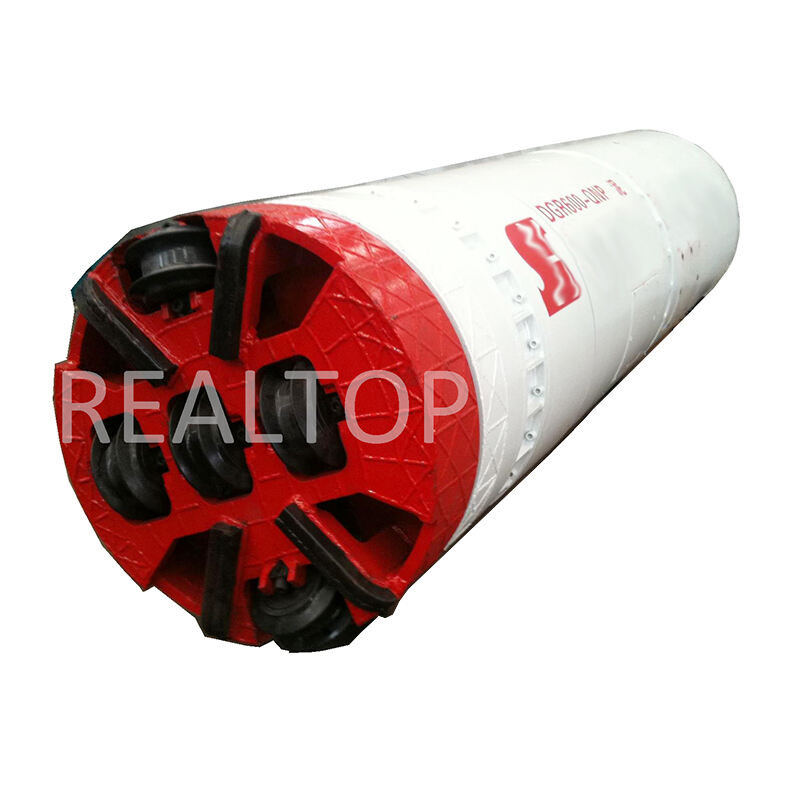
When operating a micro tunnel boring machine, one of the most critical yet frequently underestimated maintenance tasks is managing cutter head lubrication at the right intervals. Unlike surface-level machinery where lubrication access is straightforward, micro TBMs work in confined, high-pressure underground environments where replenishment cycles must be carefully calculated to prevent premature wear, seal failure, and unexpected downtime. Getting this interval wrong — either too frequent or not frequent enough — directly affects bore quality, tool life, and overall project cost.
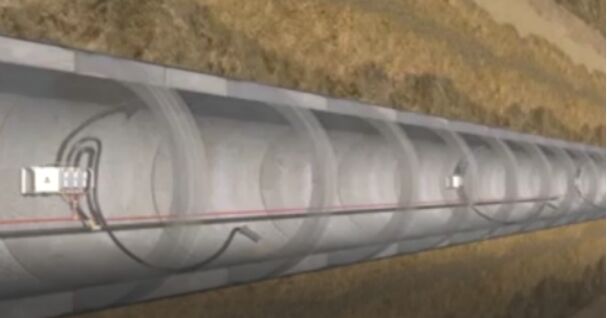
The answer to how often cutter head lubrication should be refreshed is not a single fixed number. It depends on a combination of geological conditions, drive length, machine diameter, rotation speed, and the lubrication delivery system in use. However, industry practice and engineering logic do provide clear frameworks that allow operators and project engineers to establish reliable, site-specific schedules. This article breaks down those frameworks, explains the underlying mechanisms, and gives you the decision tools needed to manage cutter head lubrication confidently on any micro TBM project.
Understanding Why Cutter Head Lubrication Degrades Over Time
The Mechanical Stress Environment at the Cutter Head
The cutter head of a micro tunnel boring machine operates under enormous mechanical stress. It rotates continuously against rock, clay, sand, or mixed-face ground while simultaneously advancing forward under hydraulic thrust. This combination of rotational friction and axial load generates significant heat at the bearing and seal interfaces, which is the primary driver of lubricant degradation.
Grease and oil-based lubricants used in cutter head lubrication systems are formulated to maintain film strength under pressure, but heat accelerates their chemical breakdown. Once the base oil separates from the thickener in grease, or once oxidation reduces oil viscosity, the lubricant loses its ability to prevent metal-to-metal contact. The timeline for this degradation is measured not just in calendar time but in operating hours and rotational cycles.
In soft ground formations such as silt or loose sand, cutter head lubrication tends to be contaminated by fine particles that infiltrate bearing cavities, accelerating wear of the lubricant film. In harder rock formations, the heat generated per unit of advance is higher, which shortens effective lubricant life even in the absence of contamination. This is why ground condition is one of the most important variables when determining refresh intervals.
How Lubrication Loss Occurs During Tunneling Operations
Cutter head lubrication does not simply degrade in place — it is also actively displaced during operation. As the cutter head rotates, lubricant is gradually pushed outward from bearing races and seal lip contact zones by centrifugal force and the mechanical action of rotating components. In water-bearing ground, groundwater pressure at the face can infiltrate poorly pressurized lubrication systems, diluting or washing out the lubricant entirely.
This displacement effect means that even if the lubricant has not chemically degraded, the quantity available at critical contact surfaces diminishes over time. Modern automatic lubrication systems address this by continuously injecting small, metered quantities of lubricant at programmed intervals to compensate for displacement losses. However, even with automated systems, a full cutter head lubrication refresh — where old, contaminated material is purged and replaced — remains a scheduled necessity.
Understanding this dual mechanism of degradation and displacement explains why cutter head lubrication intervals cannot simply be extended indefinitely by using higher-quality lubricants. The geometry and operating dynamics of the cutter head itself create an inherent consumption and displacement rate that must be matched by a corresponding replenishment schedule.
Key Factors That Determine the Right Refresh Interval
Drive Length and Cumulative Operating Hours
Drive length is one of the most reliable indicators for scheduling cutter head lubrication refreshes. On short drives of less than 100 meters, it may be feasible to complete the drive with intermediate top-up injections from an automated system without performing a full purge and repack. On longer drives exceeding 200 or 300 meters, at least one or two intermediate full refreshes are typically recommended depending on ground conditions and machine specifications.
Cumulative operating hours provide an equally valid benchmark. Many micro TBM manufacturers specify cutter head lubrication intervals in hours of main bearing rotation — commonly between 150 and 300 operating hours for a full refresh, with continuous automated top-ups in between. These figures should always be treated as starting points, adjusted based on real-time monitoring data from temperature sensors and pressure feedback on lubrication delivery lines.
Project engineers should log actual operating hours carefully, separating idle time from productive cutting time. A machine that has accumulated 300 calendar hours but only 200 productive cutting hours has a meaningfully different lubrication status than one that has run 300 hours under full cutting load. Accurate logging is not optional — it is the foundation of a defensible maintenance schedule.
Ground Conditions and Formation Abrasivity
The abrasivity of the formation being cut has a direct and well-documented impact on how quickly cutter head lubrication breaks down. Formations with high quartz content — such as coarse sand, gravel, and certain sandstones — generate abrasive fines that penetrate bearing seals and degrade lubricant films at an accelerated rate. In such formations, refresh intervals should be shortened by 20 to 40 percent compared to baseline recommendations.
Soft cohesive soils present a different challenge. Clay and silt formations tend to create adhesive contamination rather than abrasive contamination, but they can still compromise cutter head lubrication integrity by clogging purge pathways and mixing with grease to form a stiff, non-lubricating paste. Engineers working in mixed-face conditions — where both soft and hard materials are encountered in the same drive — should adopt the more conservative interval applicable to the more demanding material.
High groundwater pressure adds another variable. When working below the water table, the lubrication system must maintain a positive pressure differential to prevent ingress. If that differential is lost even briefly, water infiltration can rapidly compromise cutter head lubrication quality and necessitate an unscheduled emergency purge. This risk argues for more frequent scheduled checks and shorter refresh intervals in high-water-table conditions.
Recommended Refresh Intervals by Operating Scenario
Standard Conditions: Moderate Ground, Typical Drive Length
For micro TBM operations in moderate ground — cohesive soils with low to moderate groundwater, drives in the 100 to 200 meter range — a general industry guideline recommends a full cutter head lubrication refresh every 100 to 150 operating hours of main bearing rotation, with automated continuous top-ups maintaining pressure and fill levels between full refreshes. This cadence provides a reasonable balance between maintenance effort and protection against premature wear.
During each refresh, operators should not only purge and recharge the lubrication system but also inspect the condition of the expelled material. The color, consistency, and presence of metallic particles or water in the old lubricant are diagnostic indicators. Darkened, granular, or watery expelled lubricant suggests that the previous interval was at or beyond its limit. Clean expulsion with minimal contamination suggests the interval could potentially be extended slightly on subsequent drives.
This diagnostic approach — treating each refresh as both a maintenance event and an inspection point — is what separates well-managed micro TBM operations from reactive ones. It transforms cutter head lubrication management from a fixed calendar task into a data-driven, adaptive process that improves with each project.
Aggressive Conditions: Abrasive Ground, Long Drives, High Water Pressure
When operating in abrasive formations, completing drives longer than 300 meters, or working in high-groundwater environments, the safe refresh interval for cutter head lubrication shrinks considerably. Intervals of 60 to 80 operating hours for a full purge and recharge are not uncommon in such conditions, with automated systems providing nearly continuous micro-dosing between those events.
In extreme cases — highly abrasive mixed-face with large groundwater inflow — some operators schedule cutter head lubrication checks at every planned intermediate jacking station or pipe joint installation, effectively using those operational pauses to inspect and top up the system. This adds time to the schedule but dramatically reduces the risk of a catastrophic bearing failure mid-drive, which would be far more costly in both time and money.
The use of an automatic grouting and lubrication system significantly improves consistency in these aggressive scenarios. Automated systems eliminate the human error factor — a technician forgetting or delaying a manual injection — and can be programmed to respond to real-time pressure or temperature signals rather than strictly following a fixed time cycle. This responsiveness is particularly valuable in variable ground conditions where demand on cutter head lubrication fluctuates unpredictably.
The Role of Automated Lubrication Systems in Managing Refresh Schedules
How Automation Changes the Refresh Frequency Equation
The adoption of automated lubrication delivery systems has fundamentally changed how cutter head lubrication is managed on modern micro TBM projects. Rather than relying on periodic manual injections — which are inherently discontinuous and subject to human scheduling errors — automated systems deliver precise, metered quantities of lubricant at programmed intervals, maintaining consistent film thickness and pressure at bearing and seal interfaces throughout the cutting cycle.
This continuous delivery approach does not eliminate the need for full periodic refreshes, but it does extend the safe interval between them by reducing contamination buildup and displacement losses. A machine running a high-quality automatic cutter head lubrication system can typically operate for 30 to 50 percent longer between full purge-and-recharge events compared to a manually lubricated equivalent, depending on conditions.
Beyond simple volume delivery, advanced systems monitor back-pressure in lubrication lines as a proxy for system health. A sudden drop in back-pressure may indicate a ruptured line or seal failure. A sustained rise may indicate a blocked purge pathway or a packed cavity that can no longer accept lubricant — both conditions that should trigger an immediate inspection rather than waiting for the next scheduled refresh. This real-time feedback loop is a major operational advantage.
Integrating Lubrication Scheduling with Overall Project Planning
Cutter head lubrication scheduling should not be treated as a standalone maintenance task. It must be integrated into the overall project execution plan from the pre-drive phase onward. This means identifying intermediate maintenance windows — typically aligned with pipe installation cycles or planned jacking pauses — where lubrication inspections and refreshes can occur without disrupting the overall advance rate.
Pre-drive planning should include a site-specific lubrication plan that specifies the expected refresh interval based on ground investigation data, the chosen lubricant specification, the automated system settings, and trigger conditions for unscheduled interventions. This plan should be reviewed and updated as actual ground conditions encountered during the drive are compared against the pre-drive geotechnical data.
Integrating cutter head lubrication scheduling into the broader project plan also supports better cost management. Lubricant consumption is a predictable variable cost, and knowing the expected refresh frequency allows procurement teams to ensure adequate stock is available on site, avoiding project delays caused by something as avoidable as running out of the correct lubricant grade mid-drive.
FAQ
What is the minimum recommended refresh interval for cutter head lubrication on a micro TBM?
In standard moderate ground conditions, a full cutter head lubrication refresh is typically recommended every 100 to 150 operating hours of main bearing rotation. In aggressive ground — abrasive formations, high groundwater, or long drives — this interval should be reduced to 60 to 80 hours. These figures are starting points; actual intervals should be adjusted based on real-time monitoring data and inspection of expelled lubricant condition.
Can automated lubrication systems replace scheduled full refreshes entirely?
No. Automated cutter head lubrication systems are highly effective at maintaining continuous film pressure and reducing displacement losses between full refreshes, but they cannot replace periodic full purge-and-recharge events. Over time, contamination accumulates in bearing cavities regardless of continuous injection, and this contaminated material must be physically purged to restore full protection. Automated systems extend intervals and improve consistency — they do not eliminate the need for scheduled full refreshes.
How can I tell if cutter head lubrication has failed between scheduled refreshes?
Key indicators of cutter head lubrication failure between scheduled refreshes include unusual bearing noise or vibration detected through the machine frame, abnormal temperature rise at the main bearing housing, a drop in lubrication line back-pressure on automated system displays, and increased cutting torque without a corresponding change in ground conditions. Any of these signals should prompt an immediate unscheduled inspection and likely an early refresh before the next planned interval.
Does the type of lubricant affect how often cutter head lubrication needs to be refreshed?
Yes, lubricant specification directly affects refresh interval. High-quality EP greases or biodegradable lubrication fluids specifically formulated for underground TBM applications will generally maintain performance longer than general-purpose alternatives, allowing somewhat extended intervals in moderate conditions. However, even the best lubricant cannot fully compensate for a fundamentally inadequate refresh schedule. The lubricant specification and the refresh interval should be determined together, in consultation with the machine manufacturer and the lubrication system supplier, based on site-specific conditions.
Table of Contents
- Understanding Why Cutter Head Lubrication Degrades Over Time
- Key Factors That Determine the Right Refresh Interval
- Recommended Refresh Intervals by Operating Scenario
- The Role of Automated Lubrication Systems in Managing Refresh Schedules
-
FAQ
- What is the minimum recommended refresh interval for cutter head lubrication on a micro TBM?
- Can automated lubrication systems replace scheduled full refreshes entirely?
- How can I tell if cutter head lubrication has failed between scheduled refreshes?
- Does the type of lubricant affect how often cutter head lubrication needs to be refreshed?