
 EN
EN
 AR
AR BG
BG HR
HR CS
CS FR
FR DE
DE EL
EL HI
HI IT
IT JA
JA KO
KO RO
RO RU
RU ES
ES TL
TL ID
ID LT
LT SK
SK SL
SL UK
UK VI
VI ET
ET TH
TH TR
TR FA
FA AF
AF MS
MS HY
HY AZ
AZ KA
KA BN
BN LO
LO LA
LA MN
MN NE
NE MY
MY KK
KK UZ
UZ KY
KY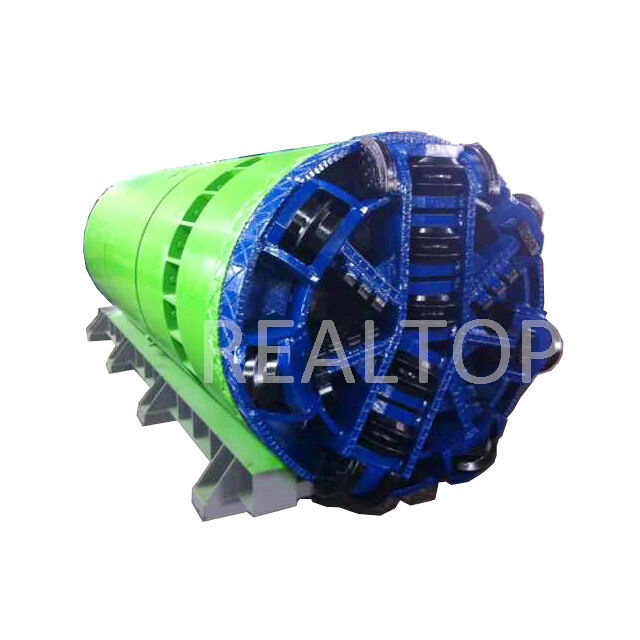
When underground construction teams encounter basalt formations, they face one of the most demanding geological challenges in the industry. Basalt is an extraordinarily dense, abrasion-resistant volcanic rock that can rapidly wear down conventional cutting tools and slow project timelines to a crawl. Understanding the key advantage of a rock pipe jacking machine in basalt conditions requires a close look at how this specialized equipment is engineered to handle compressive strengths and abrasive characteristics that would defeat standard trenchless machinery.
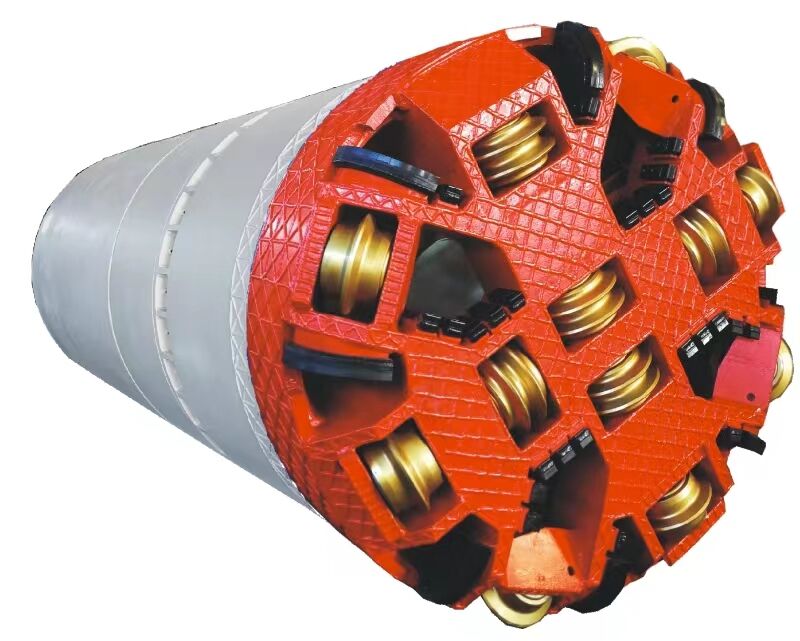
A rock pipe jacking machine is purpose-built for hard-rock and mixed-face ground conditions, making it the preferred choice for pipeline installation projects where basalt layers are present. Its design philosophy centers on sustained cutting performance, efficient spoil removal, and structural resilience under extreme geological pressure. These are not incremental improvements over a standard machine — they represent a fundamentally different engineering approach that directly addresses the unique demands of basalt excavation.
Understanding Basalt and Why It Challenges Conventional Pipe Jacking
The Geological Nature of Basalt
Basalt is an igneous rock formed from the rapid cooling of lava, resulting in a fine-grained, extremely hard matrix. Its unconfined compressive strength (UCS) can range from 100 MPa to well above 300 MPa, placing it among the most challenging materials for mechanical excavation. The rock's density and mineral composition — rich in pyroxene and plagioclase feldspar — create an abrasive environment that aggressively wears cutting surfaces.
Beyond sheer hardness, basalt often presents jointing, fracturing, and irregular layering that can cause unpredictable ground behavior during tunneling. These geological variables mean that any machine operating in basalt must not only cut through solid rock but also manage fragmented sections, water ingress through fractures, and shifting face pressures. A standard slurry or earth pressure balance machine is simply not configured to handle this combination of challenges effectively.
Project engineers working in urban or infrastructure-dense environments often have no alternative to trenchless methods, which means the capability of the rock pipe jacking machine to advance through basalt without surface disruption becomes a critical project enabler. Choosing the wrong machine type in these conditions leads to cutter damage, machine downtime, and significant cost overruns that jeopardize entire project schedules.
Why Conventional Machines Fall Short in Basalt
Conventional pipe jacking machines designed for soft ground or mixed soil conditions rely on carbide disc cutters or drag bits optimized for lower-strength materials. When these tools encounter basalt, rapid cutter wear occurs within short advance distances, sometimes requiring cutter changes after only a few meters of progress. Each cutter replacement event demands a hyperbaric intervention or costly ground treatment, both of which drive up project costs considerably.
The torque and thrust capacities of standard machines are also often insufficient for basalt. Hard rock requires substantially higher cutting forces distributed across a well-designed cutterhead, and machines not built for this duty cycle may experience gearbox strain, main bearing overload, or structural fatigue. A rock pipe jacking machine, by contrast, is engineered from the ground up to sustain the torque demands that basalt excavation imposes continuously over long drive lengths.
Spoil management is another critical limitation. Basalt produces rock chips and fines rather than the clay or silty slurry that conventional machines are designed to transport. Without an appropriate slurry circuit capable of handling coarse, angular particles, blockages in the discharge line can halt progress entirely. The rock pipe jacking machine addresses this with a slurry balance system and transport circuit specifically configured for rock-generated spoil.
The Core Advantage: Engineered Cutterhead Design for Basalt
Disc Cutter Configuration and Hard-Rock Tooling
The single most important advantage of a rock pipe jacking machine in basalt is its cutterhead, which is specifically configured with hardened disc cutters designed to fracture rock through compressive indentation rather than scraping. These disc cutters, typically made from high-chromium or tungsten carbide compounds, roll across the rock face under high thrust loads, initiating and propagating cracks that break the basalt into manageable chips. This mechanism is fundamentally more efficient against hard rock than drag-style cutting.
The spacing and layout of disc cutters on the cutterhead face are carefully calculated based on the rock's tensile and compressive strength properties. In basalt specifically, the inter-cutter spacing must be optimized to maximize crack propagation between adjacent kerfs, ensuring full-face coverage and minimizing the energy required per unit volume of rock removed. This engineering precision directly translates into faster advance rates and longer cutter life in demanding basalt formations.
Gauge cutters and center cutters are reinforced to withstand the elevated wear rates encountered at the periphery and center of the cutterhead, where rotational speed and loading conditions are most severe. Some configurations incorporate carbide-studded wear plates and replaceable wear rings to protect the cutterhead body itself, extending the overall service life of the machine in highly abrasive basalt conditions. This level of tooling sophistication is absent from standard soft-ground pipe jacking equipment.
High Torque and Thrust Capacity
A rock pipe jacking machine is rated for significantly higher torque output than its soft-ground counterparts. In basalt, the cutterhead must overcome the rock's resistance on every rotation, and this demands a robust drive system — typically a multi-motor hydraulic or electro-hydraulic configuration — capable of delivering sustained high torque without overheating or performance degradation over long operating periods.
Thrust force must similarly be elevated to press disc cutters into the basalt face with sufficient indentation force to initiate cracking. The main thrust cylinders of a rock pipe jacking machine are designed to deliver forces measured in hundreds of tonnes, distributed evenly across the pipe string to prevent joint failure while ensuring consistent face advance. This balance between high thrust at the cutterhead and controlled load distribution along the pipe string is a defining engineering characteristic of machines built for hard-rock environments.
The structural frame and main bearing of the machine are also designed with higher safety margins to handle the dynamic loading that basalt excavation generates. Rock excavation produces impulsive force peaks as disc cutters chip through brittle material, and the machine's structural integrity must accommodate these shock loads without fatigue cracking or bearing failure over the full length of a drive that may extend hundreds of meters.
Slurry Balance System as a Key Enabler in Basalt
Managing Rock Chips and Groundwater Through the Slurry Circuit
The slurry balance system is integral to the operational success of a rock pipe jacking machine in basalt. Unlike soft-ground excavation where the slurry transports fine-grained soils, basalt excavation generates angular rock chips of varying sizes. The slurry circuit must be engineered to suspend, transport, and separate these coarse particles without causing blockages in the feed and discharge lines, which have a larger diameter and higher flow capacity than those found on standard machines.
Bentonite slurry in the pressurized chamber at the face serves two critical functions: it supports the excavation face against collapse — particularly important in fractured or jointed basalt — and it acts as the transport medium for excavated material. Maintaining the correct slurry density and pressure at the face is essential for preventing uncontrolled ground movements above the drive alignment, especially in urban environments where surface settlement tolerances are tight.
The separation plant at the surface, which processes the slurry returning from the machine, must be sized and configured to handle the high solids content and coarse particle sizes that basalt produces. Vibrating screens, hydrocyclones, and centrifuges work in combination to clean the slurry for recirculation while disposing of the rock chips efficiently. This complete system approach — from face to separation plant — is what allows the rock pipe jacking machine to maintain continuous advance in basalt without the clogging and downtime that would afflict a less capable system.
Face Pressure Stability in Fractured Basalt
Fractured or jointed basalt introduces the risk of sudden ground movement, water inrush, or surface settlement if face pressure is not maintained precisely. The slurry balance system of a rock pipe jacking machine continuously monitors and adjusts slurry pressure at the face to counteract changing ground conditions. Automated pressure control systems respond to fluctuations caused by changing rock structure or varying depth of cover, maintaining a stable excavation environment throughout the drive.
In particularly challenging zones where basalt alternates with softer weathered material or where extensive jointing creates locally unstable conditions, the slurry pressure acts as a continuous stabilizing force. This capability is not just about operational efficiency — it is fundamentally about safety, ensuring that underground workers and surface infrastructure above the drive alignment are protected throughout the construction process. The rock pipe jacking machine therefore provides a safety advantage as well as a performance advantage in these demanding geological settings.
Durability and Lifecycle Advantages in Long Hard-Rock Drives
Extended Cutter Life and Reduced Intervention Frequency
One of the most commercially significant advantages of a rock pipe jacking machine designed for basalt is the extended life of its cutting tools relative to adapted or inadequate alternatives. When disc cutters are properly specified for the basalt's hardness and abrasivity, advance rates remain consistent and cutter change intervals are predictable, allowing project teams to schedule maintenance interventions efficiently rather than reacting to unexpected failures.
Modern rock pipe jacking machines often incorporate cutter wear monitoring systems that track the condition of individual disc cutters in real time, alerting operators to impending cutter failure before it causes damage to the cutterhead body or adjacent tools. This predictive maintenance capability reduces the frequency of costly unplanned stops and helps project managers maintain schedule adherence on tight-deadline infrastructure projects where basalt is an unavoidable geological challenge.
The overall cost of cutter replacement over the life of a hard-rock drive in basalt is substantially lower when the correct machine is deployed from the outset. Over-specifying for soft ground or under-specifying for hard rock both lead to excessive cutter consumption, machine wear, and project delays. The purpose-built rock pipe jacking machine minimizes total cost of ownership by maintaining consistent performance throughout the drive duration rather than degrading rapidly under basalt conditions.
Structural Robustness and Long-Term Machine Reliability
The structural components of a rock pipe jacking machine — including the shield body, main drive housing, and articulation system — are fabricated to withstand the higher dynamic and static loads that basalt excavation imposes over extended periods. High-strength steel grades, reinforced wear zones, and robust sealing systems ensure that the machine maintains its operational integrity across drives that may span several hundred meters through continuous hard rock.
Articulation and steering systems must function reliably even under the elevated jacking forces required to advance through basalt. The machine's ability to make directional corrections while under high thrust load is essential for maintaining alignment accuracy, particularly on infrastructure projects where the pipe must follow a precisely defined grade and alignment to connect with existing network elements. Structural reliability in the articulation system is therefore a direct contributor to installation quality, not just machine longevity.
Contractors working repeatedly in basalt-rich geologies — such as regions with extensive volcanic rock formation — find that investing in a purpose-built rock pipe jacking machine rather than adapting soft-ground equipment delivers measurably better project outcomes across multiple drives. The machine's ability to consistently meet advance rate targets, maintain spoil handling performance, and sustain tool life in basalt creates a competitive operational advantage that accumulates across the lifetime of the equipment.
FAQ
What makes a rock pipe jacking machine different from a standard pipe jacking machine?
A rock pipe jacking machine is specifically engineered for high-strength rock formations like basalt, featuring hardened disc cutters, higher torque and thrust capacities, reinforced structural components, and a slurry balance system configured for coarse rock chip transport. Standard pipe jacking machines are optimized for soft ground and cannot sustain the cutting forces, cutter wear rates, or spoil handling demands that basalt excavation imposes.
How does a rock pipe jacking machine maintain face stability in fractured basalt?
The slurry balance system maintains pressurized bentonite slurry at the excavation face, counteracting groundwater pressure and supporting unstable or fractured basalt against collapse. Automated pressure control systems continuously adjust slurry pressure to respond to changing ground conditions, ensuring face stability and protecting surface infrastructure above the drive alignment throughout the excavation process.
What advance rates can be expected with a rock pipe jacking machine in basalt?
Advance rates depend on the specific UCS and abrasivity of the basalt, the drive diameter, and the machine's cutterhead configuration. With correctly specified disc cutters and an optimally designed cutterhead layout, a rock pipe jacking machine can achieve consistent and commercially viable advance rates in basalt conditions where conventional machines would be unable to progress without repeated cutter changes and extended downtime.
Is a rock pipe jacking machine suitable for mixed-face conditions where basalt and softer ground are both present?
Yes, many rock pipe jacking machines are designed to handle mixed-face conditions where hard basalt layers alternate with softer geological formations. The slurry balance system and cutterhead tooling configuration can be adapted to manage both rock and softer ground, though the machine parameters — such as slurry pressure, advance rate, and cutter selection — must be carefully managed as ground conditions change along the drive alignment to maintain performance and face stability.
Table of Contents
- Understanding Basalt and Why It Challenges Conventional Pipe Jacking
- The Core Advantage: Engineered Cutterhead Design for Basalt
- Slurry Balance System as a Key Enabler in Basalt
- Durability and Lifecycle Advantages in Long Hard-Rock Drives
-
FAQ
- What makes a rock pipe jacking machine different from a standard pipe jacking machine?
- How does a rock pipe jacking machine maintain face stability in fractured basalt?
- What advance rates can be expected with a rock pipe jacking machine in basalt?
- Is a rock pipe jacking machine suitable for mixed-face conditions where basalt and softer ground are both present?