
 EN
EN
 AR
AR BG
BG HR
HR CS
CS FR
FR DE
DE EL
EL HI
HI IT
IT JA
JA KO
KO RO
RO RU
RU ES
ES TL
TL ID
ID LT
LT SK
SK SL
SL UK
UK VI
VI ET
ET TH
TH TR
TR FA
FA AF
AF MS
MS HY
HY AZ
AZ KA
KA BN
BN LO
LO LA
LA MN
MN NE
NE MY
MY KK
KK UZ
UZ KY
KY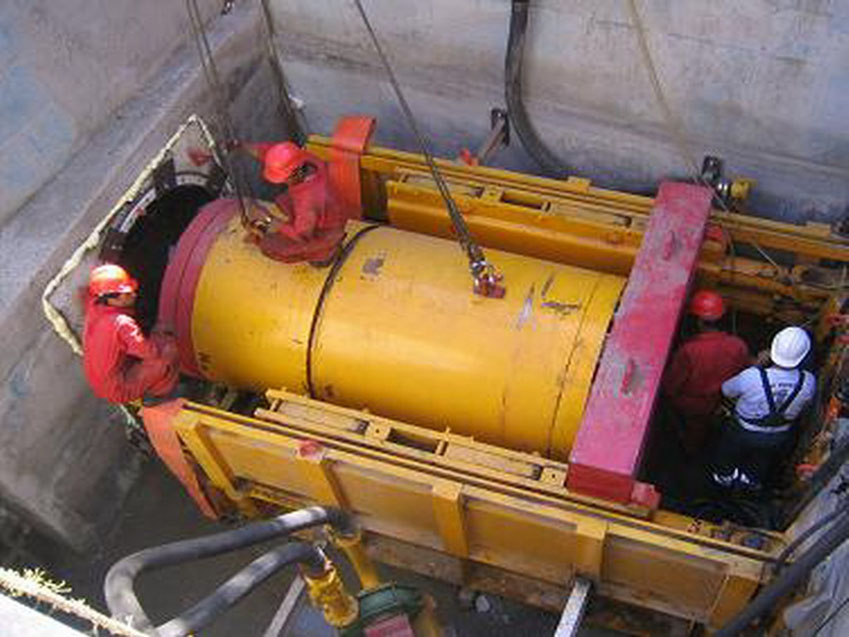
When infrastructure projects require crossing beneath active railroad corridors, engineers face a narrow set of viable options. Surface excavation is rarely permitted, open-cut methods disrupt rail operations, and traditional pipe-jacking can struggle with soil variability. In this demanding context, the micro tunnel boring machine has emerged as the preferred solution for utility crossings, drainage tunnels, and small-diameter pipeline installations beneath live rail lines. Its ability to complete precise, enclosed excavation without any surface disturbance is what separates it from every alternative available in the civil engineering toolkit today.
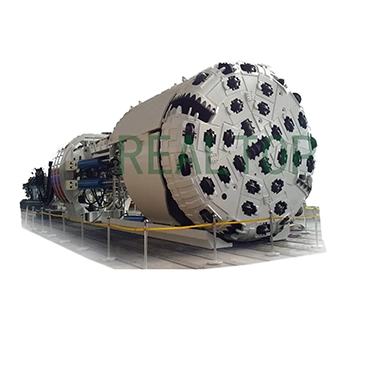
The top advantage of a micro tunnel boring machine under railroads is its capacity to maintain complete ground stability while the machine advances forward, protecting track geometry, ballast integrity, and the structural safety of the railroad corridor above. This article examines exactly why that advantage is so critical, how it is achieved mechanically, and what it means for project owners, contractors, and rail operators making decisions about subsurface crossings beneath active lines.
Understanding the Core Challenge of Railroad Crossings
Why Railroads Create Exceptional Excavation Constraints
Railroads represent one of the most sensitive infrastructure environments for any underground construction activity. Unlike roads, which can tolerate temporary lane closures and surface disruption during utility crossings, active rail lines cannot accept any measurable settlement, vertical misalignment, or ballast disturbance without triggering mandatory safety shutdowns. Even millimeter-level track deflection can require immediate inspection, speed restrictions, or full service suspension, all of which carry enormous operational and financial consequences for rail operators and their customers.
The soil and rock conditions beneath railroads also add a layer of complexity. Decades of train loading, vibration, and ballast compaction create non-uniform ground conditions that open-face boring equipment cannot reliably manage. Loose granular zones may exist alongside compacted clay pockets, and groundwater infiltration in these environments can accelerate face instability if excavation pressure is not carefully controlled. A micro tunnel boring machine addresses all of these concerns through mechanized, closed-face excavation that continuously supports the tunnel face during advancement.
The Regulatory and Operational Stakes
Rail authorities around the world enforce strict approval processes before any underground crossing beneath their corridors can begin. These processes typically require detailed risk assessments, ground movement monitoring plans, and proof that the chosen construction method can operate within pre-set settlement tolerances, often as low as 5 to 10 millimeters of surface movement at the rail head. Contractors who propose open-cut, hand-tunneled, or conventional pipe-jacking methods typically face extended approval timelines and conditional permits that significantly increase project risk.
By contrast, the micro tunnel boring machine methodology has a well-documented track record of achieving sub-millimeter surface settlement in sensitive environments when properly engineered. This established performance history gives rail authorities confidence in the method, shortens the approval process, and reduces the likelihood of compliance-related stoppages once construction begins. For project owners under schedule pressure, this regulatory advantage alone can justify the investment in microtunneling over any other crossing method.
The Top Advantage: Ground Stability Without Surface Disruption
How the Machine Maintains Continuous Face Support
The defining mechanical advantage of a micro tunnel boring machine in railroad environments is its slurry-pressure or earth-pressure balance system, which maintains positive support at the excavation face throughout the entire drive. Unlike auger boring or hand-tunneled pipe jacking, where the face is momentarily exposed during each excavation cycle, the micro tunnel boring machine never releases the ground support pressure as it advances. The cutter head rotates against the face while pressurized slurry or conditioned spoil fills the cutting chamber, matching the native soil pressure and preventing any inward ground movement.
This continuous pressure equilibrium is what eliminates the ground settlement risk that makes railroad authorities so cautious about approving subsurface work. With a properly calibrated micro tunnel boring machine, the soil above the tunnel crown experiences no stress change during excavation because the machine replaces the excavated ground with equivalent structural support in real time. This is fundamentally different from any intermittent support method, and it is the reason why this technology is considered the engineering standard for crossings beneath high-sensitivity infrastructure.
Precision Steering and Grade Control Beneath Tracks
Beyond face stability, the micro tunnel boring machine offers laser-guided steering precision that ensures the installed pipe or casing follows the exact design alignment regardless of soil variation. This is critical beneath railroads because any deviation in the tunnel path can bring the excavation dangerously close to rail foundation elements or result in pipe grades that do not meet drainage or structural requirements. Remote-controlled steering jacks inside the machine allow the operator to make real-time corrections without halting the drive or opening the ground surface.
The guidance system typically uses a combination of laser theodolite tracking, gyroscopic positioning, and surface reference benchmarks to maintain alignment accuracy within a few millimeters over drives that may extend 50 to 300 meters or more. For railroad crossings where the crossing angle, depth, and pipe grade are all precisely specified by the rail authority, this level of steering control gives the micro tunnel boring machine an operational advantage that no manually steered boring system can match. It also produces documented as-built records that satisfy post-construction verification requirements from rail authorities.
Operational Advantages That Compound the Top Benefit
Eliminating Train Service Disruption
One of the most commercially significant consequences of the micro tunnel boring machine's ground stability advantage is that trains never need to stop running during construction. The entire operation takes place from surface-level launch and reception pits positioned well outside the active rail corridor, with all excavation and pipe installation occurring below ground. Rail operators do not need to schedule maintenance windows, impose speed restrictions, or assign trackside safety personnel for extended periods during the boring drive itself.
This operational continuity has direct financial value for rail operators who cannot afford revenue loss or passenger disruption, and it has equal value for project contractors who avoid the cost and complexity of coordinating restricted working windows around train schedules. The micro tunnel boring machine method effectively decouples the construction timeline from the rail operations schedule, which is a form of project efficiency that no surface-disturbing method can replicate. In urban rail environments where trains operate around the clock, this decoupling is not just convenient — it is a fundamental project feasibility requirement.
Suitability Across a Wide Range of Ground Conditions
Railroads are built across diverse terrain, and the ground beneath them can range from soft alluvial soils to hard fractured rock. The micro tunnel boring machine is available in configurations specifically designed for different ground types, including slurry-pressure machines for soft or water-bearing soils and rock-cutting head variants for consolidated or mixed-face conditions. This adaptability means that a single construction methodology can be applied consistently to railroad crossings regardless of geological variation along the project corridor.
For project engineers, specifying a micro tunnel boring machine as the designated method for all railroad crossings on a long pipeline route simplifies procurement, risk management, and contractor coordination. It removes the need to evaluate multiple crossing methods on a case-by-case basis and establishes a consistent quality standard that can be applied and audited across every crossing. In large infrastructure programs where dozens of railroad crossings may be required, this methodological consistency generates cost and time savings that become substantial at program scale.
Long-Term Infrastructure Benefits for Rail Corridors
Protecting the Structural Integrity of Rail Foundations
The installed product pipe or casing that results from a micro tunnel boring machine drive provides a permanent structural element beneath the railroad that actually contributes to long-term ground stability in the crossing zone. Reinforced concrete or steel jacking pipes used in microtunneling are engineered to carry the overburden loads from the ground above them, which means the completed crossing includes a load-bearing structure that protects the utility line, resists future ground movement, and prevents any post-construction settlement from the tunnel void itself.
This contrasts with some trenchless methods where the annular space between the product pipe and the bored hole is inadequately grouted, leaving a potential settlement pathway that can activate under repeated train loading over time. The micro tunnel boring machine process naturally minimizes annular void formation because the pipe is installed immediately behind the cutting head as excavation advances, leaving no unsupported open cavity. Annular grouting injected at the pipe-to-ground interface fills any remaining space and consolidates the ground around the installed structure.
Reducing Maintenance Risk Over the Asset Lifecycle
Infrastructure installed beneath railroads must last for decades without requiring intervention, because any future repair or replacement work faces the same operational constraints as the original installation. A crossing installed with a micro tunnel boring machine using durable jacking pipe materials achieves a service life that typically matches or exceeds the expected life of the railroad itself, reducing the probability that maintenance activities will be required during the operational period. The quality of the bore alignment and pipe joint integrity produced by this method also minimizes the risk of joint displacement or groundwater infiltration that could necessitate early remediation.
Project owners who evaluate the lifecycle cost of railroad crossings rather than just initial construction cost consistently find that the micro tunnel boring machine method delivers superior long-term value. The premium over simpler boring methods is offset by lower maintenance risk, higher reliability, and the elimination of future track disruption costs that would arise if a poorly installed crossing required remediation. Rail authorities that review asset management records also tend to favor infrastructure programs that have consistently used high-quality installation methods, which strengthens relationships and simplifies future permitting.
Decision Guidance for Engineers and Project Owners
When the Micro Tunnel Boring Machine Is the Right Choice
The micro tunnel boring machine is the appropriate choice for railroad crossings whenever the combination of settlement sensitivity, ground conditions, or crossing diameter makes open-face or manually steered methods inadequate. In practical terms, this applies to most crossings beneath passenger rail lines, urban transit corridors, freight mainlines, and any railroad where the operating speed or track classification imposes strict tolerance limits on ground movement. It is also the preferred method when groundwater is present, when crossing depths are shallow relative to pipe diameter, or when the crossing length exceeds the reliable range of conventional auger boring.
Project owners should also consider the micro tunnel boring machine when the regulatory approval process involves a rail authority with documented experience of requiring this method for similar crossings. Proposing an alternative method to an authority that has established the micro tunnel boring machine as its preferred standard introduces approval risk that can delay projects by months and trigger costly design revisions. Aligning the proposed construction method with the authority's standard practice from the outset is a project management decision that experienced rail infrastructure contractors consistently recommend.
Key Technical Parameters to Define Before Mobilization
Before mobilizing a micro tunnel boring machine for a railroad crossing, project engineers must define the design pipe diameter, the required invert level and grade, the anticipated ground conditions throughout the drive, the groundwater regime, and the allowable surface settlement envelope. These parameters determine the machine specification, the thrust pit dimensions, the slurry treatment system requirements, and the monitoring plan that will be implemented during the drive. Inadequate geotechnical investigation at the design stage is the most common cause of performance problems during micro tunnel boring machine operations, and it is particularly damaging in railroad environments where any unplanned stoppage creates immediate pressure from the rail authority.
Contractors with specific railroad crossing experience using the micro tunnel boring machine method bring value beyond the mechanical operation of the equipment. Their knowledge of rail authority requirements, standard permit conditions, track monitoring protocols, and risk management procedures reduces the project team's learning curve and minimizes the probability of compliance events during construction. Selecting an experienced microtunneling contractor for railroad crossings is a risk management decision as much as a procurement decision.
FAQ
What makes the micro tunnel boring machine safer than other methods under railroads?
The micro tunnel boring machine maintains continuous pressurized support at the excavation face, which prevents ground movement above the tunnel during boring. Other methods such as auger boring or open-face pipe jacking temporarily expose the ground face, creating windows of instability that can cause settlement. Beneath railroads, where even minor settlement threatens track geometry and operational safety, the micro tunnel boring machine's closed-face mechanism is the primary reason it is considered the safest and most reliable crossing method available.
How deep must the tunnel be beneath railroad tracks when using a micro tunnel boring machine?
The minimum depth depends on the pipe diameter, the ground conditions, and the requirements of the specific rail authority. A common general guideline is a minimum cover of 1.5 to 2 times the pipe outer diameter above the crown of the installed pipe, measured to the base of the rail ballast. However, rail authorities may impose additional requirements based on their specific track standards, so the design depth should always be confirmed with the relevant rail operator and their engineering approval body before finalizing the bore profile.
Can a micro tunnel boring machine work in rock conditions beneath railroads?
Yes. Micro tunnel boring machines are available with hard rock cutting heads equipped with disc cutters or carbide-tipped cutting tools designed specifically for consolidated rock formations. These machines maintain the same ground support principles as soft-ground variants but are rated to handle rock compressive strengths that would defeat standard soil-cutting equipment. For railroad crossings in rock terrain, the rock-cutting micro tunnel boring machine provides the same settlement control and precision steering capability as its soft-ground counterpart, making it equally suitable for sensitive crossing environments regardless of geology.
How long does a typical micro tunnel boring machine drive beneath a railroad take?
Drive duration depends on the crossing length, pipe diameter, ground conditions, and the operational efficiency of the microtunneling crew. For a typical single-track railroad crossing with a drive length of 20 to 50 meters under favorable ground conditions, the boring phase itself may take one to three days of continuous operation after the launch pit and setup work is complete. Longer drives or harder ground conditions naturally extend the timeline. The key point for rail operators is that the boring phase produces no surface activity above the railroad and therefore creates no interference with train operations regardless of how long the drive takes.
Table of Contents
- Understanding the Core Challenge of Railroad Crossings
- The Top Advantage: Ground Stability Without Surface Disruption
- Operational Advantages That Compound the Top Benefit
- Long-Term Infrastructure Benefits for Rail Corridors
- Decision Guidance for Engineers and Project Owners
-
FAQ
- What makes the micro tunnel boring machine safer than other methods under railroads?
- How deep must the tunnel be beneath railroad tracks when using a micro tunnel boring machine?
- Can a micro tunnel boring machine work in rock conditions beneath railroads?
- How long does a typical micro tunnel boring machine drive beneath a railroad take?