
 EN
EN
 AR
AR BG
BG HR
HR CS
CS FR
FR DE
DE EL
EL HI
HI IT
IT JA
JA KO
KO RO
RO RU
RU ES
ES TL
TL ID
ID LT
LT SK
SK SL
SL UK
UK VI
VI ET
ET TH
TH TR
TR FA
FA AF
AF MS
MS HY
HY AZ
AZ KA
KA BN
BN LO
LO LA
LA MN
MN NE
NE MY
MY KK
KK UZ
UZ KY
KY
When underground infrastructure projects face extreme spatial restrictions, selecting the right tunneling equipment becomes one of the most consequential engineering decisions a contractor can make. A micro tunnel boring machine designed for minimal launch pit dimensions addresses a very specific and growing need in urban and constrained-site construction. Not every project demands the smallest possible launch pit, but for those that do, understanding which applications truly require this capability can mean the difference between a feasible project and one that never gets off the ground.
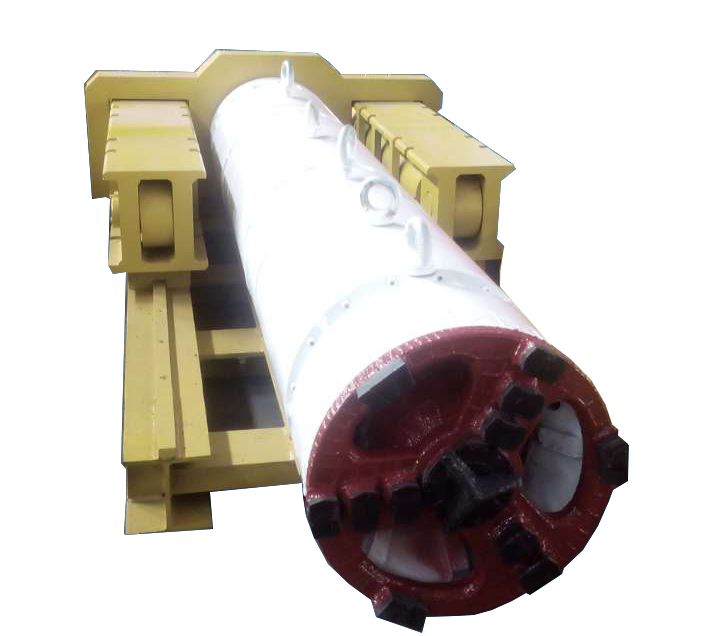
The demand for compact launch pit configurations in micro tunnel boring machine deployments has intensified as cities grow denser, utility corridors become more congested, and environmental regulations limit ground disturbance. This article identifies the specific application scenarios where a micro tunnel boring machine with the smallest possible launch pit is not just preferable but essentially mandatory, and explains the engineering, logistical, and regulatory factors that drive that requirement.
Understanding Launch Pit Requirements in Microtunneling
What the Launch Pit Actually Accommodates
The launch pit, sometimes called the drive shaft or jacking pit, is the below-grade excavation from which a micro tunnel boring machine is lowered, assembled, and pushed forward into the ground. Its dimensions must accommodate the machine's rear section, the jacking frame, pipe string management, spoil removal systems, and crew access. Every one of these elements competes for space, and in constrained sites, that competition becomes critical.
A micro tunnel boring machine optimized for a small launch pit typically achieves this through a compact rear drive unit, a shorter jacking frame profile, and a simplified slurry or auger spoil removal design. Engineers must verify that the pit dimensions still allow safe assembly, mechanical connection of pipe segments, and unobstructed thrust application. Reducing pit size is never simply a matter of scaling down; it requires deliberate machine architecture designed around confined launching conditions.
Understanding what physically fits inside a launch pit helps clarify which job sites genuinely benefit from a machine designed around minimum pit dimensions. Projects where standard pit sizes are fully achievable gain little advantage from a compact-pit machine. The real value emerges when the site itself imposes a hard spatial constraint that cannot be engineered away.
How Pit Dimensions Affect Project Feasibility
In open rural or industrial environments, contractors typically have the flexibility to excavate launch pits of standard dimensions without disrupting surrounding infrastructure. However, urban and semi-urban projects frequently encounter buried utilities, existing foundations, road traffic lanes, or property boundaries that limit how wide and how deep a launch pit can realistically be. A micro tunnel boring machine that requires a large pit may simply be incompatible with these constraints.
Beyond physical obstruction, pit size directly influences project cost and schedule. A larger pit requires more excavation, more shoring, more dewatering, and a larger surface footprint—all of which translate into higher cost, longer setup time, and greater disruption to surrounding areas. When site conditions allow for a smaller pit, the entire project economics shift favorably. This is why the smallest-launch-pit micro tunnel boring machine category has attracted serious engineering investment in recent years.
Applications That Demand the Smallest Launch Pit
Urban Road Crossings and Intersections
One of the clearest application scenarios for a micro tunnel boring machine with a minimal launch pit is the crossing of busy urban roads and intersections. Traffic management agencies routinely restrict how much of a road surface can be closed at one time, how long closures can last, and how deep excavations can penetrate near existing pavement structures. A standard-pit microtunneling setup may require closing multiple lanes or even an entire intersection for the duration of pit construction and machine setup.
A micro tunnel boring machine engineered for a compact launch pit reduces the surface footprint of the operation dramatically. Contractors can often complete the pit excavation and shoring within a single lane closure, launch the machine, and restore traffic flow while the drive continues underground. This capability is particularly valuable in city centers where traffic disruption carries both regulatory penalties and real economic impact on surrounding businesses.
Municipal infrastructure programs for water main replacement, sewer rehabilitation, and stormwater line installation in dense urban grids frequently cite this exact scenario. The smallest achievable launch pit becomes a project enabler rather than simply a cost-saving feature when traffic management constraints are the governing design criterion.
Railway and Highway Crossings Under Live Traffic
Crossings beneath active railway lines or high-speed highways represent another application category where a micro tunnel boring machine with a small launch pit provides decisive advantages. Rail operators typically impose strict limits on excavation proximity to track beds, and pit locations are often confined to narrow easements between the active rail corridor and adjacent property lines. These easements may only offer a few meters of usable width for the launch pit.
Highway crossings share similar constraints. Contractors working beneath motorways face setback requirements from traffic barriers, sound walls, and embankment toe lines. The available work zone may be confined to a strip of land that simply cannot accommodate a standard-size launch pit without violating safety exclusion zones. A micro tunnel boring machine designed around compact pit geometry becomes the only viable mechanical solution in these scenarios.
The compactness of the pit also matters from a structural standpoint. Shallower, narrower pits require less aggressive shoring systems, reduce the risk of settlement near adjacent infrastructure, and lower the groundwater management burden. All of these factors reinforce the engineering preference for the smallest possible launch pit when working near sensitive transportation infrastructure.
Installation in Restricted Urban Courtyards and Alleyways
Dense urban blocks frequently contain courtyards, alleyways, and service corridors that have no direct street access for heavy equipment. Laying new utility lines—gas distribution, fiber conduit, drainage connections—through these zones using open-cut methods is either impossible or prohibitively expensive due to demolition and reinstatement requirements. A micro tunnel boring machine capable of launching from a very small pit opens these spaces to trenchless installation for the first time.
Historical districts and heritage-listed urban zones present a particularly compelling case. In these environments, disruption to paved surfaces, landscaping, or subsurface archaeology is tightly controlled. A compact-pit micro tunnel boring machine can often be deployed in a configuration that disturbs only a minimal footprint of the protected surface zone. The machine does its work underground while the historic character of the space above is preserved.
Utility operators managing aging infrastructure networks in older city cores frequently identify these constrained block interiors as the hardest-to-service zones in their networks. A micro tunnel boring machine with small-pit capability addresses this gap directly, enabling renewal of buried assets that would otherwise require invasive surface demolition.
Residential Street Rehabilitation in Mature Suburban Grids
Mature suburban neighborhoods present a different version of the same challenge. Streets are often narrow, parking is dense, and front yards or sidewalk strips may be the only available space for a launch pit. Homeowner access requirements, proximity to building foundations, and the presence of ornamental trees with protected root zones all constrain pit placement and sizing.
Water utility projects replacing aging lead service lines or rehabilitating deteriorating sewer laterals in these neighborhoods benefit significantly from a micro tunnel boring machine that can operate from a compact pit excavated in a sidewalk strip or a single parking bay. The smaller pit minimizes tree root impact, reduces concrete and paving removal, and allows residents to maintain driveway access during the drive phase.
Community relations in residential renewal projects are a genuine operational factor. Smaller pits mean less visual disruption, shorter construction periods at any given location, and less noise from shoring installation. These soft factors influence contractor selection in municipal tender evaluations and reinforce the business case for a micro tunnel boring machine optimized for minimal pit dimensions.
Technical Factors That Enable Small-Pit Microtunneling
Machine Design Approaches That Reduce Pit Length Requirements
The critical dimension governing pit length is the distance required to receive the full rear section of the micro tunnel boring machine plus the first pipe segment during initial launch. Machine designers reduce this requirement through articulated rear sections that can be assembled progressively within a shorter initial shaft, or through telescoping drive mechanisms that allow the jacking frame to be repositioned without extending the pit footprint.
Auger-based spoil removal systems generally support shorter rear configurations than slurry circuits, because they eliminate the need for slurry pump units and separation equipment inside the pit. For the smallest diameters in the micro tunnel boring machine range—typically below 500mm pipe outside diameter—auger systems are the dominant technology precisely because they match the compact geometry demands of small-pit deployments.
Control cabin placement also contributes to pit length management. Machines that route control umbilicals to a surface-mounted operator station rather than requiring a full control cabinet inside the pit reduce the below-grade equipment footprint substantially. Modern micro tunnel boring machine designs increasingly adopt this surface-control approach as a standard feature for urban applications.
Jacking Frame Configurations for Compact Pits
The jacking frame must transmit thrust forces from hydraulic cylinders to the pipe string without deflection or misalignment. In standard configurations, these frames occupy significant pit length. Compact-pit designs use shorter stroke cylinders with intermediate extension frames, or rely on a segmented jacking approach where the frame is repositioned at intervals rather than requiring the full pipe length to be threaded through the frame in a single stroke.
Structural efficiency of the frame directly affects how compact it can be made. Frames fabricated from high-strength steel sections can achieve the required stiffness at reduced overall dimensions compared to heavier mild-steel equivalents. This weight and size optimization is not incidental—it is a deliberate engineering response to the small-pit application requirement that defines a significant portion of the micro tunnel boring machine market.
Regulatory and Environmental Drivers for Minimal Pit Design
Urban Construction Permits and Surface Disturbance Limits
Municipal authorities in many jurisdictions have introduced explicit limits on the surface area that can be disturbed by any single construction permit for utility work. These limits reflect policy priorities around pedestrian safety, traffic management, and environmental protection. A micro tunnel boring machine that requires a large pit may exceed the permitted disturbance area, requiring either multiple permits, extended review periods, or design modifications that delay projects significantly.
Contractors who can demonstrate that their micro tunnel boring machine operates from a pit within the standard single-permit disturbance threshold gain a competitive advantage in tender processes. This regulatory alignment is not a minor administrative convenience—in some urban markets it determines whether a project can be awarded to a trenchless contractor at all, or whether the work must be redesigned as open-cut.
Environmental Protection Zones and Sensitive Ground Conditions
Watercourse crossings, wetland buffers, and environmentally sensitive zones often permit only minimal ground disturbance during utility crossings. A micro tunnel boring machine with a compact launch pit can sometimes be positioned just outside the protected zone boundary, launching from the smallest possible footprint to minimize encroachment while the drive passes beneath the sensitive area underground.
Contaminated ground scenarios present a related driver. When launch pits must be excavated in areas of known soil contamination, a smaller pit means less material to classify, handle, and dispose of as contaminated spoil. The cost savings from reduced contaminated material volumes can be substantial, and they reinforce the economic case for deploying a micro tunnel boring machine configured for minimal pit dimensions wherever ground conditions allow.
FAQ
What is the typical minimum launch pit size for a micro tunnel boring machine designed for constrained sites?
Minimum launch pit dimensions vary by machine model and pipe diameter, but compact-configuration micro tunnel boring machines designed for urban work can typically launch from pits as small as 2.5 meters in length and 1.5 meters in width for the smallest pipe diameters. These dimensions assume auger spoil removal and a surface-mounted control station. Larger diameters and slurry systems require proportionally larger pit dimensions even in compact-design machines.
Can a micro tunnel boring machine with a small launch pit still achieve accurate line and grade control?
Yes. Pit size does not inherently compromise steering accuracy. Modern micro tunnel boring machine guidance systems use laser theodolite or gyroscopic references that function equally well from compact pit configurations. The key engineering requirement is that the initial launch alignment is set correctly within the pit, and that the jacking frame provides the necessary rigidity to maintain that alignment during the first meters of drive before the pipe string develops sufficient length to stabilize the guidance geometry.
Which pipe materials are best suited for small-pit micro tunnel boring machine installations?
Vitrified clay, concrete jacking pipe, and HDPE are the most commonly used pipe materials in small-pit microtunneling applications. Jacking pipe segments for compact-pit deployments are typically manufactured in shorter lengths than standard segments, allowing them to be lowered and connected within the restricted pit space. The pipe material selection depends on the specific application—drainage, pressure main, or conduit—rather than the pit size itself, though shorter segment lengths are a practical requirement for very confined pit geometries.
Is a micro tunnel boring machine suitable for very short drives in constrained urban sites?
A micro tunnel boring machine is economically most efficient on drives of 30 meters or more, as the mobilization, pit construction, and machine setup costs must be recovered over a sufficient pipe length. However, in constrained urban environments where open-cut alternatives are extremely expensive or not permitted, shorter drives can still be cost-effective. Some contractors maintain compact-pit micro tunnel boring machine configurations specifically for these short urban drives, treating the higher unit cost as justified by the project's unique access and disturbance constraints.
Table of Contents
- Understanding Launch Pit Requirements in Microtunneling
- Applications That Demand the Smallest Launch Pit
- Technical Factors That Enable Small-Pit Microtunneling
- Regulatory and Environmental Drivers for Minimal Pit Design
-
FAQ
- What is the typical minimum launch pit size for a micro tunnel boring machine designed for constrained sites?
- Can a micro tunnel boring machine with a small launch pit still achieve accurate line and grade control?
- Which pipe materials are best suited for small-pit micro tunnel boring machine installations?
- Is a micro tunnel boring machine suitable for very short drives in constrained urban sites?