
 EN
EN
 AR
AR BG
BG HR
HR CS
CS FR
FR DE
DE EL
EL HI
HI IT
IT JA
JA KO
KO RO
RO RU
RU ES
ES TL
TL ID
ID LT
LT SK
SK SL
SL UK
UK VI
VI ET
ET TH
TH TR
TR FA
FA AF
AF MS
MS HY
HY AZ
AZ KA
KA BN
BN LO
LO LA
LA MN
MN NE
NE MY
MY KK
KK UZ
UZ KY
KY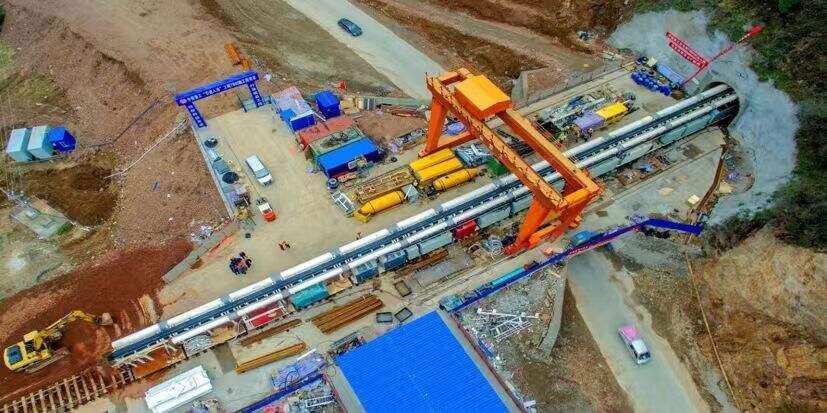
Underground construction in densely populated urban environments demands precision, control, and an absolute commitment to protecting the surface above. When engineers and contractors evaluate trenchless technology options, the question of ground movement sits at the very top of their risk register. Among the available systems, the slurry balance pipe jacking machine has established a strong reputation for keeping surface settlement to a minimum, even in challenging soil and rock conditions. Understanding exactly why this technology performs so well in this regard requires a closer look at its core operating principles.
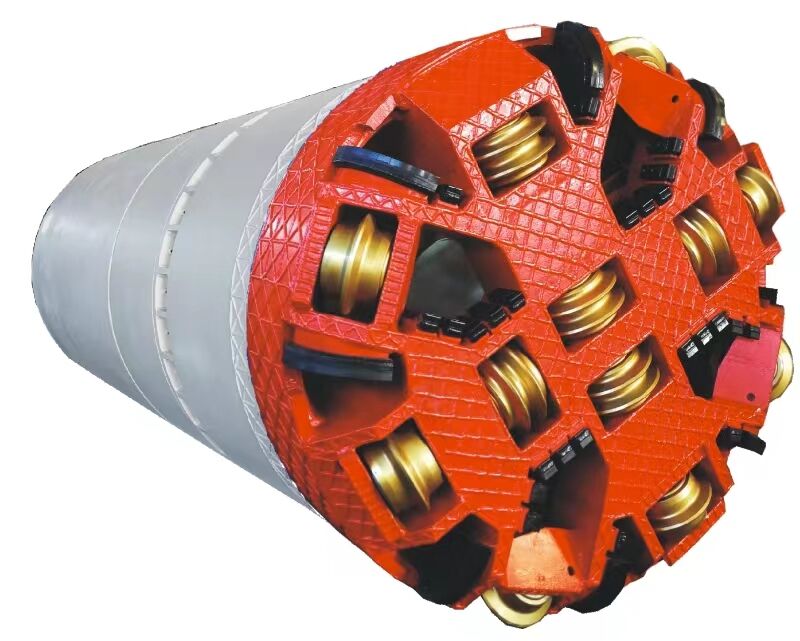
Surface settlement is not simply an inconvenience — it can compromise building foundations, damage utilities, disrupt traffic, and create serious safety liabilities. Every millimeter of unexpected ground movement in a busy urban corridor represents a potential project crisis. The slurry balance pipe jacking machine addresses this challenge through a combination of active face support, continuous pressure regulation, and controlled excavation mechanics that work together to maintain the stability of the surrounding ground throughout the entire drive. This article examines the specific reasons why this technology delivers such reliable settlement control and why that capability matters deeply to project owners, engineers, and contractors alike.
The Fundamental Mechanism Behind Settlement Control
Active Face Support Through Slurry Pressure
The primary reason the slurry balance pipe jacking machine causes minimal surface settlement lies in its ability to apply and maintain continuous, calibrated pressure against the excavation face. Unlike open-face systems that leave the soil exposed and vulnerable to collapse, this machine fills the cutting chamber with pressurized bentonite slurry at all times. The slurry acts as a fluid counterbalance to the earth and groundwater pressures acting on the face from the outside.
When the pressure inside the cutting chamber closely matches the in-situ ground pressure, soil movement toward the tunnel face is effectively prevented. This equilibrium is the cornerstone of settlement prevention. If the face pressure drops even temporarily, surrounding soil begins to migrate toward the void, triggering a chain reaction that can manifest as surface subsidence. The slurry balance pipe jacking machine is specifically engineered to prevent this pressure drop from occurring.
Operators monitor and adjust slurry pressure in real time throughout the excavation. This dynamic control capability allows the machine to respond instantly to changes in ground conditions, depth, or overburden, ensuring that the face support remains consistent regardless of what the soil profile presents. This responsiveness is a key differentiator between slurry balance systems and less sophisticated alternatives.
Prevention of Ground Arch Collapse
In natural ground conditions, a self-supporting arch of compressed soil typically forms around a tunnel opening. This ground arch is a stabilizing phenomenon, but it is highly sensitive to stress redistribution. Any disruption to the pressure balance around the tunnel can cause this arch to collapse, releasing soil mass that then migrates downward and forward into the excavation zone — and upward toward the surface.
The slurry balance pipe jacking machine preserves the integrity of this natural ground arch by ensuring that the removal of material at the face is precisely matched by the pressure support provided by the slurry. Because material is not removed faster than the face support can compensate, the ground arch remains intact and functional throughout the drive. This is particularly important in soft, loose, or water-bearing soils where the arch is weaker and more susceptible to disruption.
For rock conditions, where the ground arch is inherently more robust, the slurry balance pipe jacking machine still contributes to settlement control by preventing the loosening of fractured or jointed rock zones that might otherwise shed material into the excavation and create localized voids above the tunnel crown.
Slurry Management and Its Role in Ground Stability
The Function of Bentonite Slurry in Soil Conditioning
The bentonite slurry used in a slurry balance pipe jacking machine does far more than simply transmit pressure. It also penetrates micro-fissures and pore spaces in the surrounding soil, creating a filter cake on the excavation face. This filter cake acts as a semi-impermeable membrane that prevents slurry from migrating excessively into the formation while still allowing pressure to be transmitted effectively.
This filter cake formation is critical in permeable soils such as sands and gravels, where uncontrolled fluid infiltration could destabilize the soil matrix. By forming a stable boundary at the face, the slurry balance pipe jacking machine ensures that the support mechanism remains localized and effective, rather than dissipating into the surrounding ground. The result is consistent face support and, consequently, consistent surface settlement control.
The rheological properties of the slurry — its viscosity, density, and yield point — are carefully engineered to match the specific ground conditions encountered on each project. Slurry management is therefore not a passive background activity but an active engineering task that directly influences how well the slurry balance pipe jacking machine controls settlement throughout the drive.
Continuous Slurry Circulation and Muck Removal
One of the operational advantages of the slurry balance pipe jacking machine is its closed-loop slurry circulation system. Excavated material is mixed with the slurry at the cutting face and transported hydraulically back to the surface through a dedicated discharge pipeline. This continuous transport mechanism prevents the accumulation of excavated material inside the cutting chamber, which could otherwise create irregular pressure fluctuations.
Irregular pressure fluctuations are a known cause of localized settlement events. When material builds up and is then suddenly discharged, the pressure wave that results can disturb the equilibrium at the face. The slurry balance pipe jacking machine's continuous circulation design eliminates this risk by keeping material flowing steadily and predictably through the system at all times.
At the surface, the returned slurry is processed through a separation plant that removes excavated solids and conditions the slurry for recirculation. This separation and recycling process ensures that the slurry maintains its design properties throughout the drive, further contributing to consistent face pressure and ground stability.
Structural and Mechanical Factors That Minimize Settlement
Precision Advancement Jacking Force Control
Settlement is not only caused by face instability — it can also result from the mechanical forces applied to the ground during pipe advancement. If jacking forces are excessive or unevenly distributed, they can compress and shear the surrounding soil, creating stress concentrations that eventually manifest as surface movement. The slurry balance pipe jacking machine incorporates precise hydraulic jacking systems that allow operators to apply controlled, measured force to the pipe string.
By monitoring jacking force in real time and adjusting it in response to ground resistance, operators can ensure that the pipe advances smoothly without creating unnecessary lateral or vertical stress in the surrounding soil. This force control is particularly important when driving through variable ground conditions, where the resistance profile changes frequently and unpredictably.
Intermediate jacking stations are also commonly used in long drives with a slurry balance pipe jacking machine to distribute the total jacking force across multiple points along the pipe string. This distribution reduces peak stress at any single location and helps maintain the alignment of the pipe, both of which contribute to minimizing surface settlement over the full length of the tunnel.
Overcutting and Lubrication to Reduce Soil Disturbance
When a pipe is jacked through the ground, the annular space between the outer diameter of the pipe and the bore cut by the machine is a critical zone for settlement management. If this annular space is not properly managed, soil can migrate inward to fill it, creating a volume loss that directly causes surface settlement. The slurry balance pipe jacking machine addresses this through controlled overcutting and annular grouting.
The cutting head of the slurry balance pipe jacking machine is typically designed to cut a bore slightly larger than the outer diameter of the pipe. This deliberate overcut creates an annular gap that is immediately filled with lubricating bentonite grout injected through ports in the pipe wall. The bentonite grout prevents soil migration into the annular space, reduces friction on the pipe during jacking, and supports the ground around the pipe crown.
This combination of controlled overcutting and continuous annular lubrication is a technically sophisticated response to one of the most fundamental causes of settlement in pipe jacking operations. By eliminating the volume loss mechanism at the annular space, the slurry balance pipe jacking machine removes a major driver of surface subsidence that can affect less well-designed trenchless systems.
Application Scenarios Where Settlement Control Is Most Critical
Urban Infrastructure and Sensitive Surface Environments
The settlement-control advantages of the slurry balance pipe jacking machine are most visibly relevant in urban environments where existing infrastructure sits directly above the tunnel alignment. Highways, railways, historic buildings, and complex utility networks all impose strict settlement tolerance limits that must be respected throughout construction. In these environments, even a few millimeters of unexpected settlement can have disproportionately large consequences.
Projects involving the installation of sewer lines, water mains, gas pipelines, and cable conduits beneath busy city centers are natural applications for the slurry balance pipe jacking machine. The machine's ability to maintain consistent face pressure, control annular volume loss, and advance pipes with precision makes it a highly reliable tool for meeting the settlement performance specifications that are typically imposed on urban infrastructure contracts.
The slurry balance pipe jacking machine is also widely used for crossings beneath rivers, canals, and other water bodies where the risk of settlement-induced inundation represents an extreme hazard. The pressure control capabilities of the system provide a meaningful safety margin in these high-consequence environments, giving project engineers confidence that the crossing can be completed without compromising the integrity of the overlying water body bed.
Rock and Mixed-Face Conditions
In rock conditions or mixed-face ground where soil and rock are encountered simultaneously, controlling settlement presents a different but equally important set of challenges. Fractured rock zones, transition zones between soil and rock, and boulders embedded in soft ground can all create irregular loading conditions that test the settlement management capabilities of any tunneling system. The slurry balance pipe jacking machine is specifically designed with cutting tools and chamber configurations suited to these demanding conditions.
In rock conditions, the slurry balance pipe jacking machine uses hardened disc cutters and cutting picks capable of breaking and excavating hard rock while maintaining the sealed face configuration that supports settlement control. The slurry in the cutting chamber continues to provide pressure support even as rock is being fractured and removed, ensuring that the transition from rock to softer material does not create an uncontrolled pressure drop that could destabilize the surrounding ground.
The ability of the slurry balance pipe jacking machine to operate effectively across a wide range of ground conditions — from soft alluvial soils to competent rock — makes it a versatile choice for projects where the ground profile is variable and the consequences of settlement are high. This versatility is increasingly important as urban infrastructure projects must navigate increasingly complex subsurface environments.
FAQ
What makes the slurry balance pipe jacking machine more effective at controlling settlement than an open-face system?
An open-face system leaves the excavation face unsupported, allowing soil to migrate toward the void and creating conditions for surface settlement. The slurry balance pipe jacking machine maintains continuous pressurized slurry support against the face, preventing soil movement and preserving ground arch stability throughout the drive. This active face support is the fundamental reason why settlement is minimized.
How does the slurry pressure get calibrated to prevent over- or under-excavation?
Operators use real-time monitoring data including earth pressure sensors, slurry density measurements, and flow rate readings to calculate and maintain the correct slurry pressure. The target pressure is determined from geotechnical investigation data and is adjusted continuously during the drive as ground conditions change. This calibration prevents both over-pressure conditions that could cause heave and under-pressure conditions that could cause settlement.
Can the slurry balance pipe jacking machine be used in rock conditions and still control settlement?
Yes. The slurry balance pipe jacking machine designed for rock conditions uses specialized cutting tools to excavate hard material while maintaining the pressurized cutting chamber. The slurry continues to provide face support and annular lubrication even in rock and mixed-face conditions, ensuring that settlement control is maintained across the full length of the drive regardless of changes in the ground profile.
What role does annular grouting play in settlement prevention during pipe jacking?
Annular grouting fills the gap between the outer diameter of the jacked pipe and the bore cut by the machine. Without this grout, soil migrates inward to fill the void, causing a volume loss that directly produces surface settlement. By injecting bentonite grout continuously through ports in the pipe wall, the slurry balance pipe jacking machine prevents this volume loss mechanism and eliminates one of the primary drivers of subsidence in trenchless construction.
Table of Contents
- The Fundamental Mechanism Behind Settlement Control
- Slurry Management and Its Role in Ground Stability
- Structural and Mechanical Factors That Minimize Settlement
- Application Scenarios Where Settlement Control Is Most Critical
-
FAQ
- What makes the slurry balance pipe jacking machine more effective at controlling settlement than an open-face system?
- How does the slurry pressure get calibrated to prevent over- or under-excavation?
- Can the slurry balance pipe jacking machine be used in rock conditions and still control settlement?
- What role does annular grouting play in settlement prevention during pipe jacking?